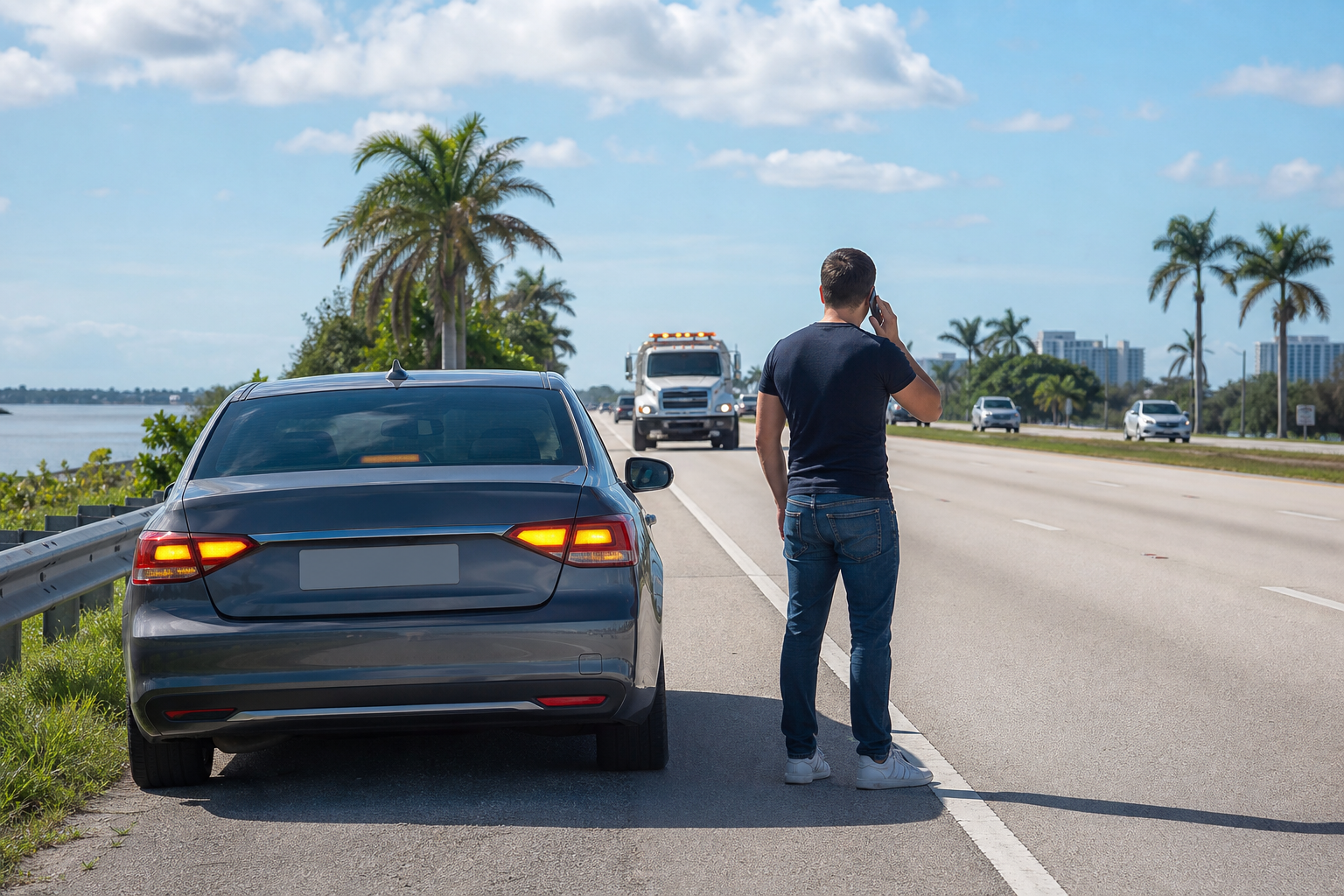
A vehicle problem can become more expensive and more dangerous when you try to drive “just a little farther.” If your car suddenly feels different, displays a serious warning light, leaks fluid, overheats, smokes, or cannot steer or stop normally, the safest choice is usually to pull over and arrange a tow.
For drivers in West Palm Beach, that decision matters even more on fast-moving routes and busy corridors. A car that is barely moving, overheating in traffic, or difficult to control is not something to push through on I-95, Florida’s Turnpike, or a heavily traveled local road. This guide helps you separate minor concerns from conditions that call for immediate towing or roadside assistance.
Immediate action: do this first
- Turn on your hazard lights and move to the safest nearby location you can reach without forcing the vehicle.
- If the car is overheating, smoking, losing power, pulling sharply, or braking poorly, stop driving as soon as it is safe.
- Park away from moving traffic if possible, shift into park, set the parking brake, and keep passengers in a safe location.
- Do not open a hot radiator cap, crawl beneath the vehicle, or continue driving to “test” a serious issue.
- Call for help and clearly describe the warning lights, sounds, leaks, damage, and your location.
The simple decision: can the car be driven safely right now?
The question is not whether the vehicle can still move under its own power. Many damaged vehicles can move briefly, but driving them can create a crash risk, leave you stranded in a worse location, or turn a manageable issue into major damage.
Choose a tow when the problem affects any of these basic functions:
- Stopping: The brakes feel weak, the pedal behaves abnormally, or the vehicle does not stop predictably.
- Steering: The wheel becomes unusually hard to turn, wanders, shakes heavily, or the vehicle pulls aggressively.
- Cooling: The temperature gauge is high, a temperature warning appears, or steam comes from under the hood.
- Tire stability: A tire is flat, badly damaged, separating, or the wheel area is visibly compromised.
- Power and visibility: The engine loses power unexpectedly, the vehicle stalls repeatedly, or essential lights are unavailable after dark or in poor visibility.
If one of these systems is affected, a tow is generally the safer option than trying to reach a shop, home, or another destination.
Warning signs that mean you should stop driving
1. The temperature gauge is high, a temperature warning appears, or steam is visible
An overheating engine needs prompt attention. Continuing to drive can cause severe engine damage, especially in warm South Florida conditions or slow traffic. Pull over safely, switch off the engine, and allow it to cool. Do not remove the radiator cap while the engine is hot. If the temperature warning remains on, coolant is visibly leaking, or the vehicle overheated after restarting, arrange a tow.
2. Smoke or a strong burning smell is coming from the vehicle
Smoke can come from several sources, including overheating fluids, electrical faults, oil contacting hot components, or brake-related problems. A burning odor after hard braking may be a sign to stop and assess rather than continue. If smoke is present, the smell is strong, or you cannot identify a harmless cause with confidence, pull over, turn the vehicle off when safe, and call for help.
3. The brake pedal feels soft, sinks, pulses severely, or the car pulls while braking
Do not gamble with a brake problem. A soft pedal, a pedal that travels much farther than normal, grinding noises, a brake warning light, or a vehicle that veers sharply during braking can mean your ability to stop is compromised. Stop driving and have the vehicle towed rather than attempting to drive slowly.
4. Steering suddenly changes or the vehicle becomes hard to control
Heavy steering, severe wheel vibration, clunking while turning, a steering wheel that does not respond normally, or a vehicle that pulls forcefully can all affect control. These symptoms are especially risky at highway speeds and when changing lanes. Safely reduce speed, pull off the road, and request towing assistance.
5. You have a flat tire with sidewall damage, a blowout, or wheel damage
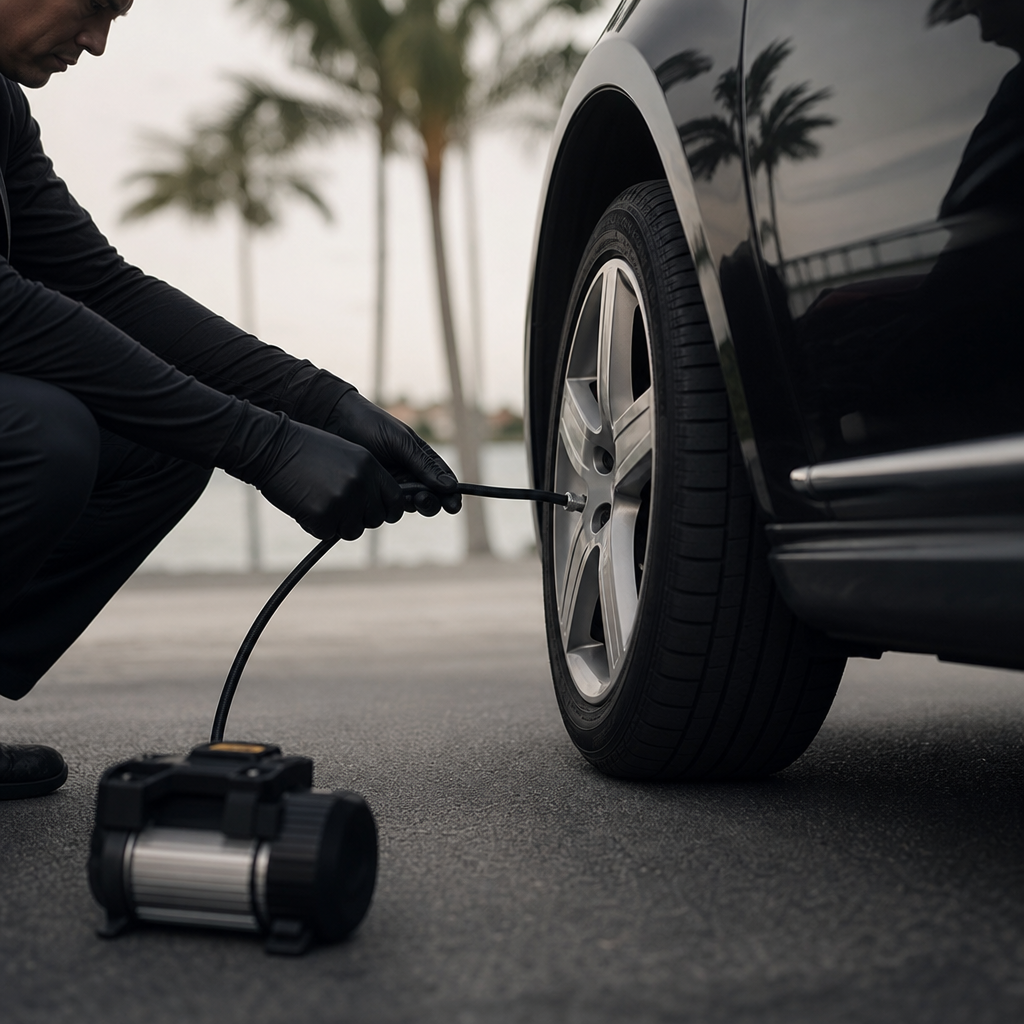
A simple puncture may be manageable if you have a safe place to stop and an appropriate usable spare. However, do not drive on a flat tire, a shredded tire, or a damaged wheel. Driving even a short distance on a flat can damage the wheel and make the vehicle unstable. If changing the tire is not safe where you are, or you do not have a roadworthy spare, call for roadside assistance or a tow.
6. A major fluid leak is forming beneath the vehicle
A few drops of water from air conditioning condensation can be normal. Other fluids deserve caution, particularly when there is a growing puddle, a strong smell, visible smoke, or a warning light. Oil, coolant, brake fluid, and transmission fluid leaks can each lead to more serious trouble. If you see a substantial leak or the vehicle is running differently, avoid driving until it can be evaluated.
7. The engine is knocking, banging, or losing power
A sudden loud mechanical noise, repeated stalling, flashing warning light, or major loss of acceleration is not a “drive it carefully” situation. Pull over safely. Trying to maintain speed in traffic with unreliable engine power can leave you exposed in an unsafe lane or create additional damage.
8. The car has been in a collision or struck a curb, debris, or deep road hazard
Even when the vehicle looks mostly normal, impact damage can affect tires, wheels, steering, suspension, cooling components, and underbody parts. Do not continue driving if a tire is damaged, a wheel sits at an unusual angle, fluid is leaking, the steering feels wrong, or something is hanging beneath the vehicle. A tow lets you avoid worsening hidden damage.
Quick roadside checklist before you decide
Use this checklist only after you are stopped in a safe place. Do not inspect the vehicle in an active traffic lane or on a narrow shoulder.
- Are any red warning lights, temperature warnings, or flashing engine warnings on?
- Is there steam, smoke, a burning odor, or a strong fuel-like smell?
- Is the vehicle leaking more than a small amount of clear water?
- Do the brakes, steering, acceleration, or shifting feel different from normal?
- Is a tire flat, visibly damaged, or making a repeated thumping sound?
- Did the problem begin after an impact, a loud bang, or driving through debris?
- Are you stopped in a location where changing a tire or troubleshooting would put you near traffic?
If you answer yes to any safety-related item, towing is the cautious choice. If the vehicle has no dangerous symptoms but will not start, has a dead battery, or has a minor issue that can be handled safely at the roadside, roadside assistance in West Palm Beach may be the right first call.
When to call for help instead of trying one more time
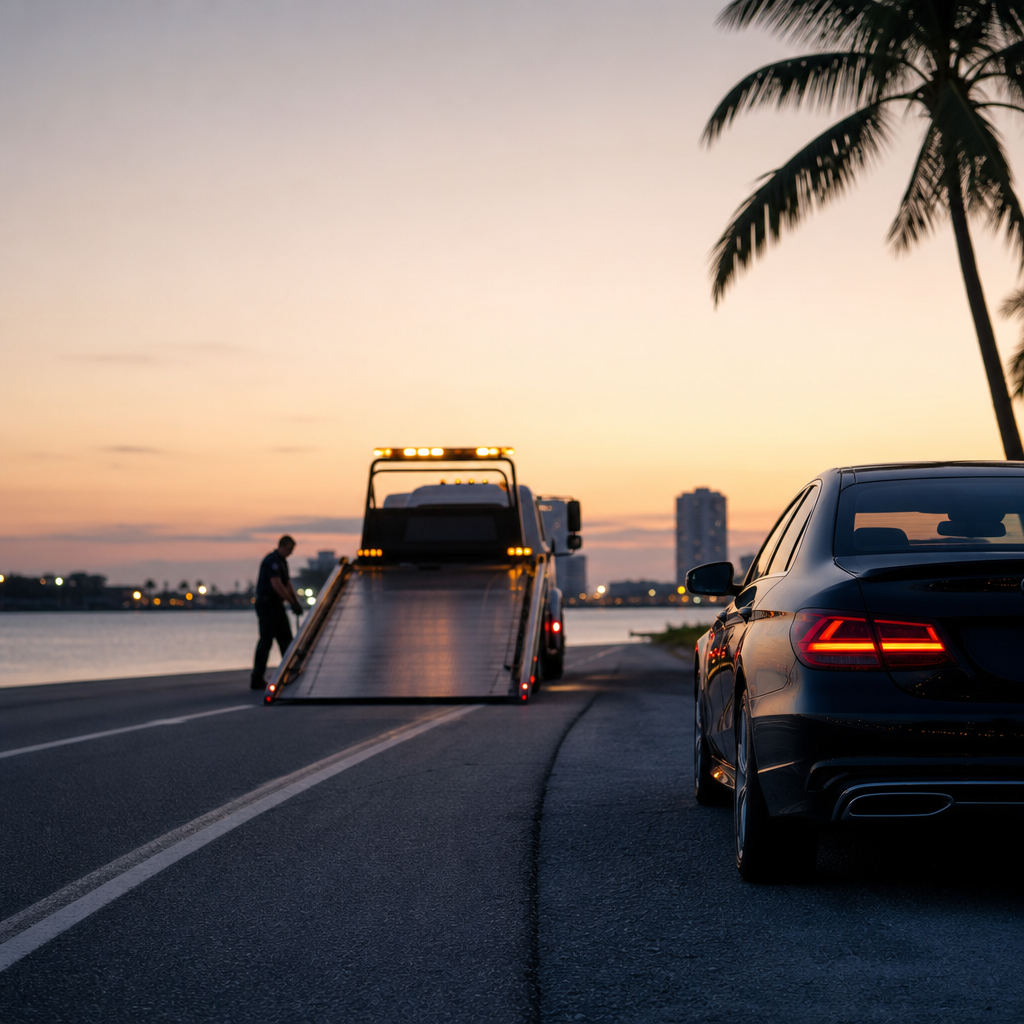
Call for a tow when you cannot confidently operate the vehicle with normal control. This includes situations where the car starts but should not be driven, such as overheating, brake trouble, a serious leak, smoke, steering problems, or collision-related damage.
When you contact a towing provider, share useful details up front:
- Your exact location, direction of travel, and nearest safe landmark or exit.
- The vehicle make, model, color, and whether it is in a parking area, driveway, shoulder, or garage.
- Whether the vehicle rolls, steers, starts, has a flat tire, or is blocked by another vehicle.
- Any visible fluid leak, smoke, collision damage, low clearance, or other loading concern.
- Your intended destination, if you already know where the vehicle should go.
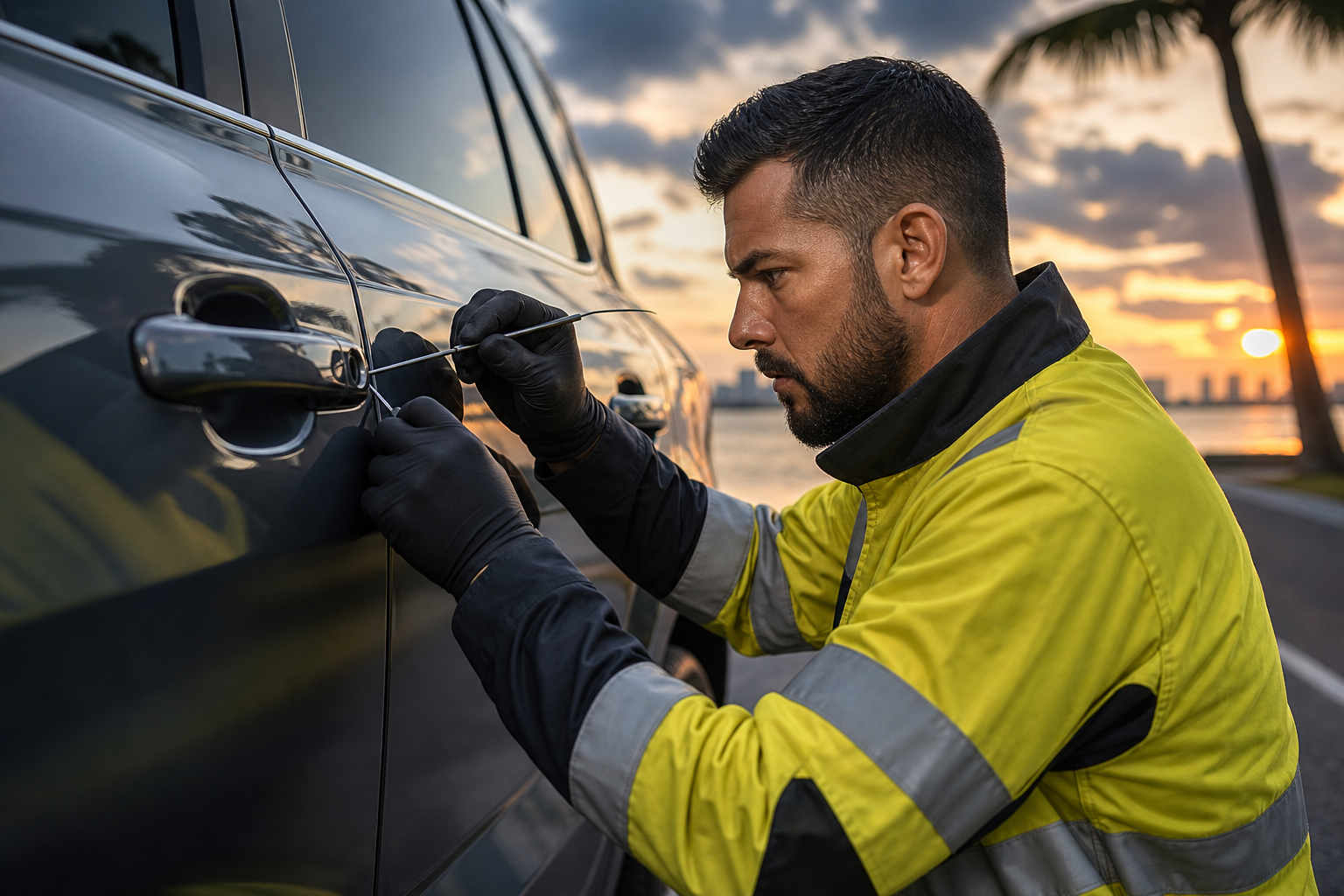
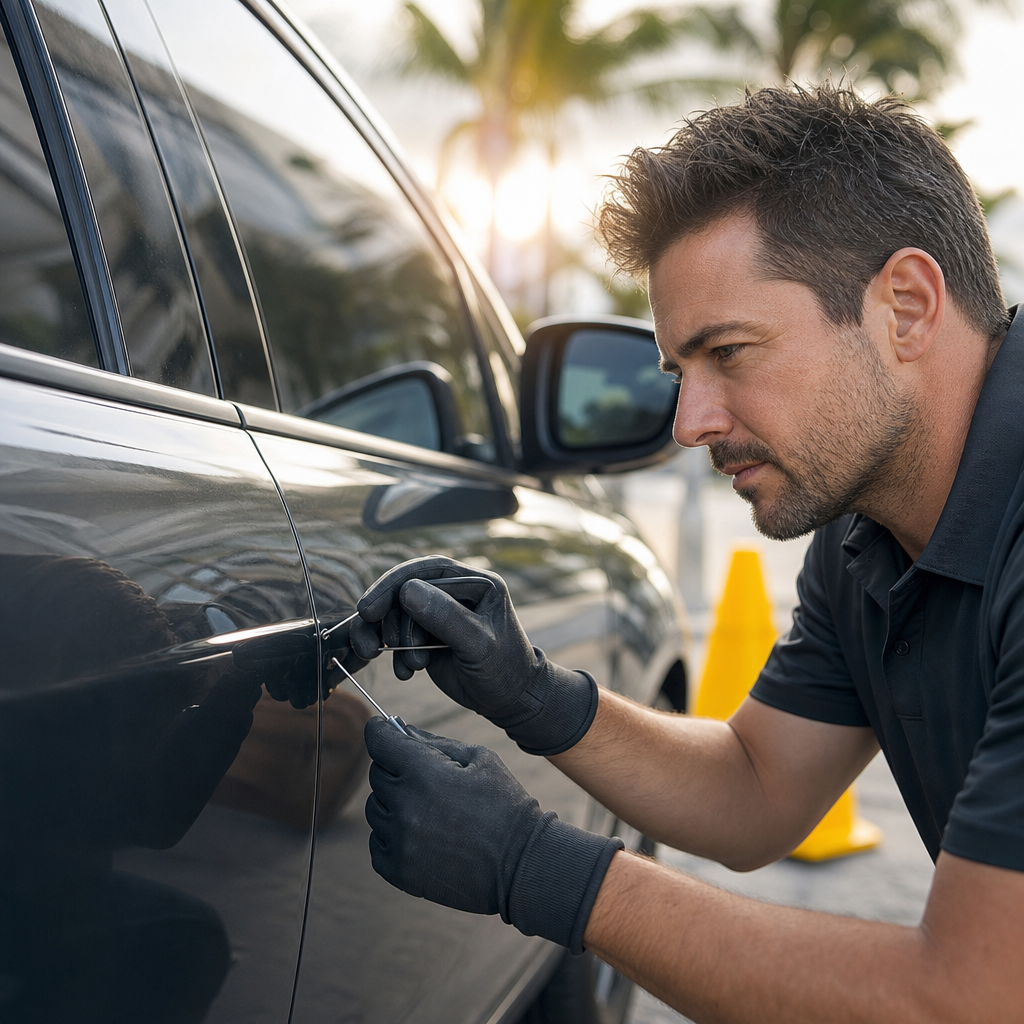
If your immediate issue is being unable to enter an otherwise safe, undamaged vehicle, use car lockout service rather than trying to force a door, break a window, or damage the lock.
Safer waiting practices after you request a tow
Once help is on the way, keep the situation from getting worse. Turn on hazard lights if they work. If you are safely off the roadway, remain in a secure location near the vehicle as conditions allow. On a busy road, avoid standing between your vehicle and traffic or directly behind it. Keep children and pets away from moving vehicles and away from the traffic side of the car.
Do not repeatedly restart an overheated or smoking vehicle. Avoid adding fluids to a hot engine. Do not attempt makeshift repairs under the vehicle on the roadside. A clear description of the symptoms is more useful than taking risks to diagnose the problem yourself.
Frequently asked questions
Can I drive a short distance if my temperature gauge is in the red?
No. Pull over safely and turn the engine off. Driving while overheating can cause serious damage quickly. Wait for the engine to cool and arrange a tow if the warning persists, steam is present, or coolant is leaking.
Should I drive on a flat tire to reach a safer parking lot?
Driving on a flat can damage the tire and wheel and may reduce control. If you can safely coast only a very short distance out of immediate danger, use your judgment based on the roadway conditions. Otherwise, stop safely and call for assistance.
Does a check engine light always mean I need a tow?
Not always. A steady check engine light without unusual driving symptoms may not require immediate towing. A flashing warning light, rough running, major power loss, smoke, or strong odors are more urgent signs to stop driving and call for help.
What if my car will not start but there are no warning signs?
If the vehicle is parked safely, roadside assistance may be able to help with a battery-related or basic no-start situation. If it cannot be safely started, moved, or diagnosed at the roadside, a tow is the appropriate next step.
Is it safer to wait inside my vehicle?
It depends on where you are stopped. In a safe parking area, remaining inside with doors locked may be reasonable. On a high-speed roadway or a hazardous shoulder, your safest position depends on traffic conditions and the surrounding area. Prioritize getting away from moving traffic whenever you can do so safely.