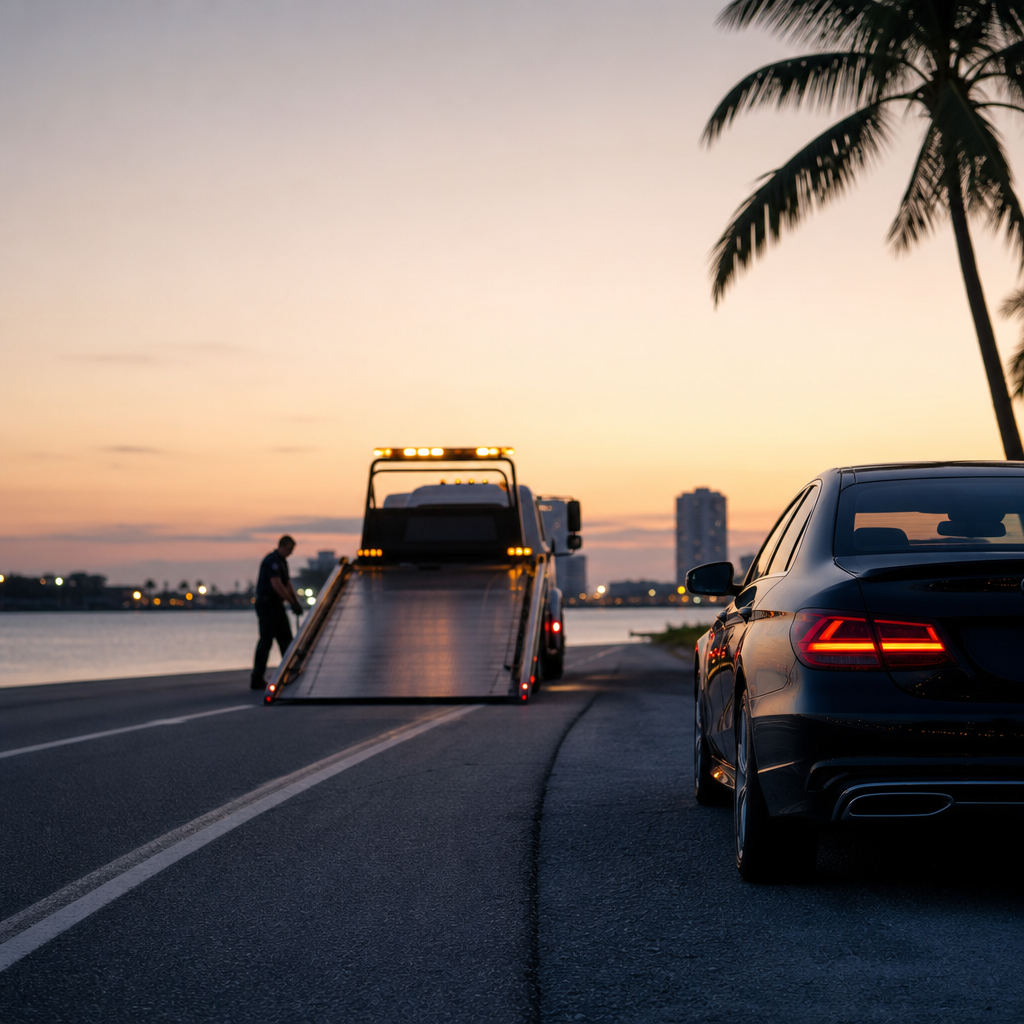
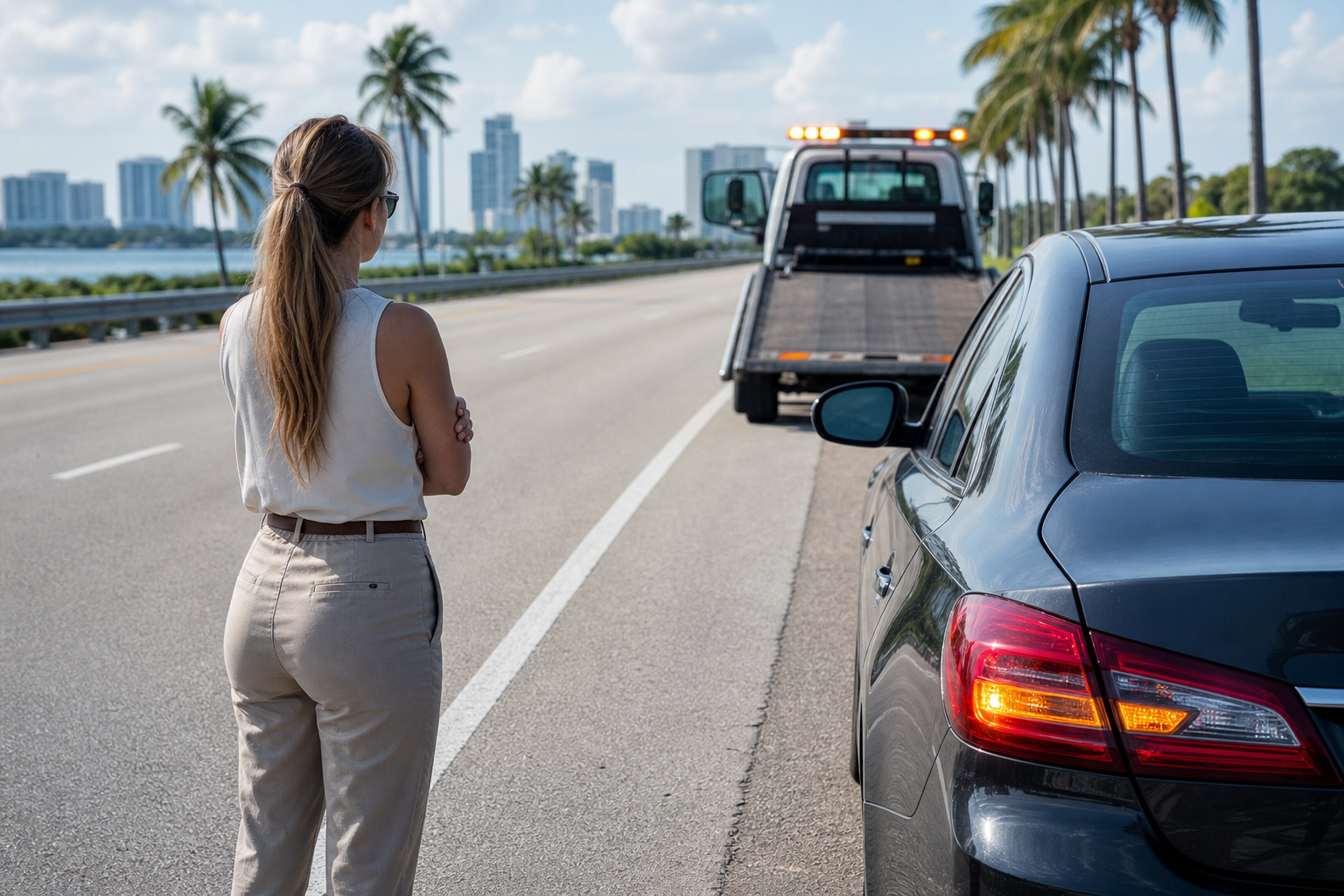
Move to the safest reachable location, turn on hazard lights, keep clear of traffic, and request towing or roadside help. Do not keep driving simply because the destination is close.
A vehicle does not need to be completely inoperable before it should be towed. In many roadside situations, continuing to drive can turn a manageable problem into a more serious breakdown, create a road hazard, or leave you stranded in a less safe location.
For drivers in West Palm Beach, this decision can be especially stressful on high-speed routes such as I-95, the Florida Turnpike, and busy corridors including Okeechobee Boulevard and Southern Boulevard. A warning light, unusual noise, tire problem, or loss of control can feel different when traffic is moving quickly nearby. When you are unsure whether to continue, the safer choice is often to stop and arrange a tow.
The basic rule: tow when safe operation is uncertain
Do not judge the situation only by whether the engine starts or the car can move. A vehicle should be towed when its steering, braking, tires, visibility, cooling system, electrical system, or ability to remain under control is uncertain. It should also be towed when driving could cause additional damage.
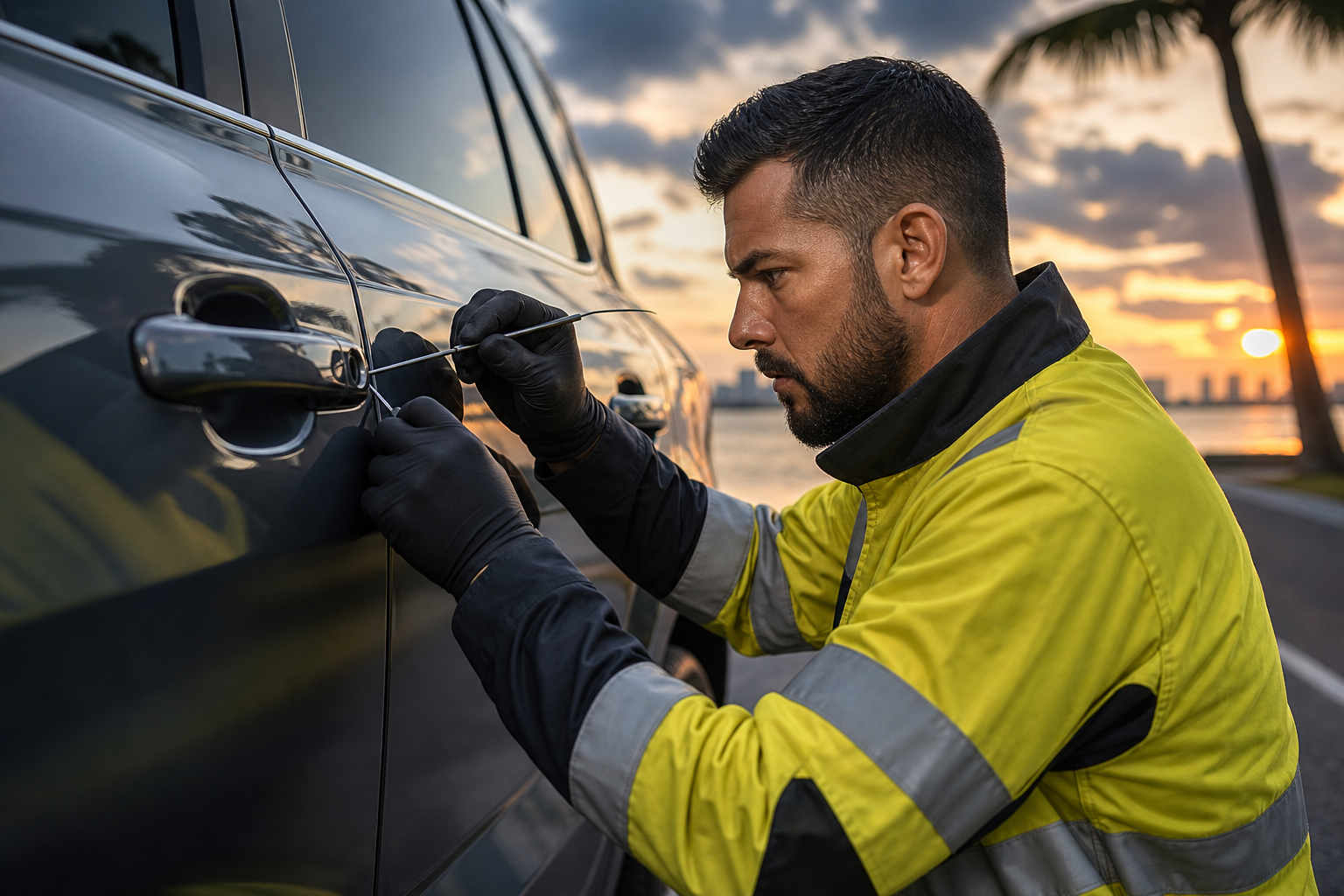
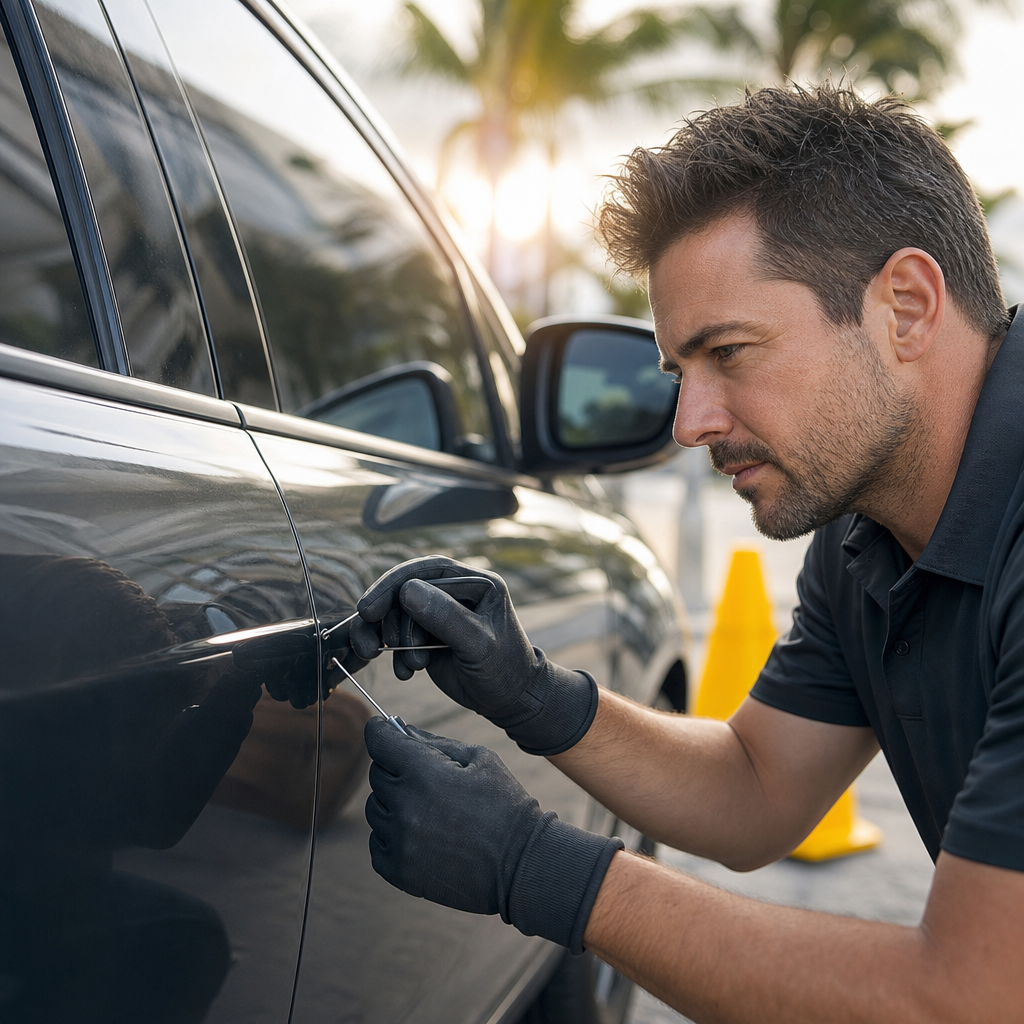
Some roadside problems can be resolved without a tow. For example, a lockout, a dead battery, or an empty fuel tank may be handled through roadside assistance when there are no other vehicle-safety concerns. If you are locked out but your vehicle is otherwise secure, request car lockout service rather than trying to force a door or window open. If the problem is unclear, roadside assistance can help assess the next safe step.
Situations where towing is the safer choice
1. The vehicle is overheating or showing signs of overheating
If the temperature gauge is in the hot zone, a temperature warning appears, steam is coming from under the hood, or there is a strong sweet odor associated with coolant, pull over as soon as it is safe. Continuing to drive an overheating vehicle can lead to major engine damage.
Turn off the air conditioning, use hazard lights, and stop in a safe location if possible. Do not open a hot radiator cap. Once stopped, arrange a tow instead of attempting to drive farther after the vehicle cools down.
2. A tire is flat, severely damaged, or unsafe to drive on
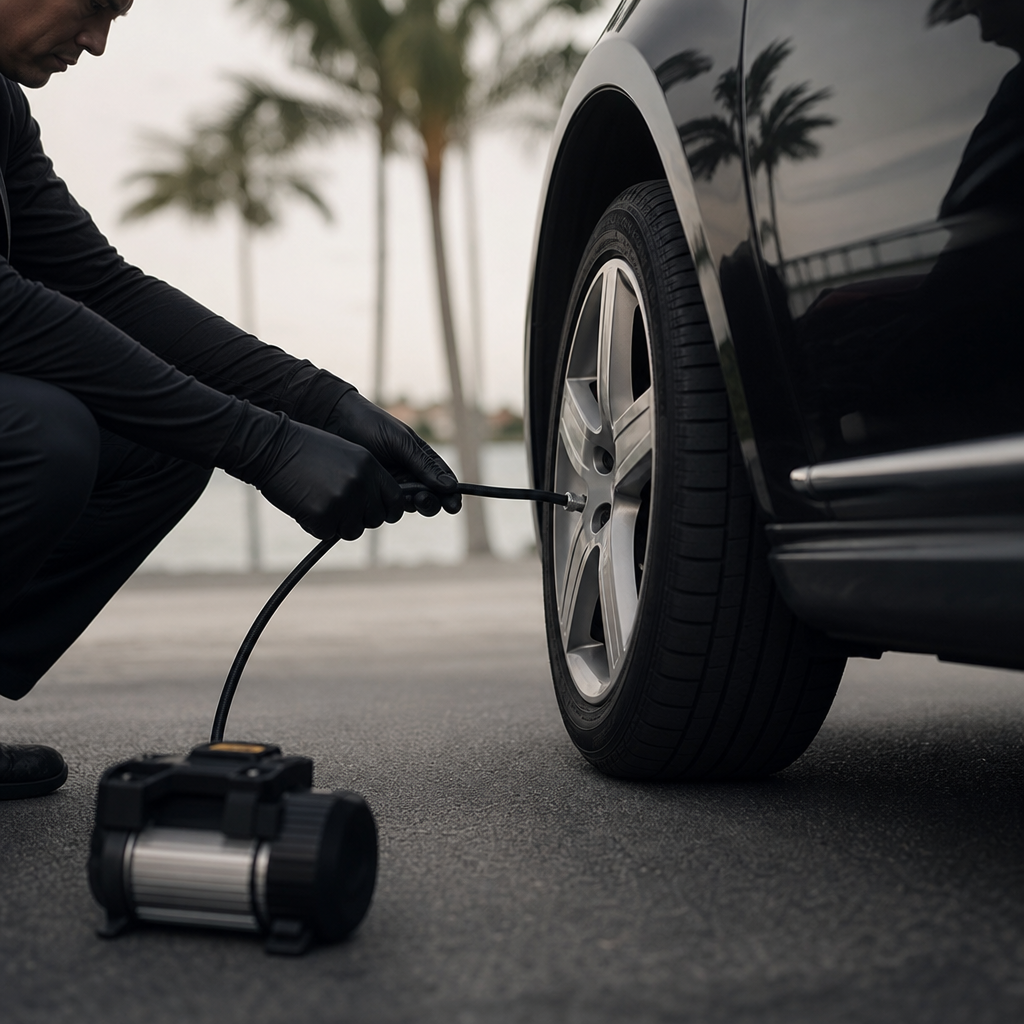
A flat tire does not always mean a tow is required, but it can. Towing is appropriate when the tire is shredded, the wheel or rim appears damaged, you do not have a usable spare, multiple tires are affected, or the vehicle cannot be safely raised where it is stopped.
It is also wise to call for help if you are on a narrow shoulder, near fast-moving traffic, in heavy rain, or in another location where changing a tire would put you too close to traffic. Driving on a flat tire, even for a short distance, can damage the wheel and reduce control.
3. Braking or steering feels abnormal
Do not drive a vehicle with a brake pedal that sinks, feels unusually soft, requires much more pressure than normal, or causes the vehicle to pull sharply. Likewise, stop driving if the steering wheel becomes difficult to turn, excessively loose, unresponsive, or accompanied by grinding or clunking noises.
Brakes and steering are core safety systems. Even if the vehicle can still move, a tow is the appropriate choice when either system behaves unpredictably.
4. The vehicle has a fluid leak or a strong burning smell
A small amount of clear water beneath a parked vehicle may simply be air-conditioning condensation. Other leaks deserve more caution, especially if you see a growing puddle, smoke, a strong fuel odor, a burning odor, or fluid coming from the engine area.
Fuel smells, smoke, and active leaks are reasons to stop driving. Turn the vehicle off when safe to do so, move away from traffic, and avoid smoking or using open flames near the vehicle. Request towing rather than trying to reach a shop or home on your own.
5. The check engine light is flashing or the engine is running badly
A steady dashboard warning light can have many causes, but a flashing check engine light, severe shaking, repeated stalling, loud knocking, or a major loss of power calls for more caution. These signs can indicate that driving may damage the vehicle or leave it unable to maintain speed safely.
If the engine is misfiring, the vehicle vibrates heavily, or acceleration is unreliable, pull over and arrange a tow. Do not try to “push through” traffic or continue onto a highway to save time.
6. The vehicle was in a collision or struck road debris
Even a minor impact can damage parts that are not obvious from outside the vehicle. Tow the vehicle when there is visible wheel, tire, bumper, underbody, lighting, steering, suspension, or fluid-line damage. The same applies if the car struck a large pothole, curb, or road debris and then began pulling, vibrating, leaking, or making new noises.
If a door, hood, trunk, or other panel will not stay secured, do not drive until the vehicle can be evaluated. Loose body panels can obstruct visibility or create a hazard for surrounding traffic.
7. The vehicle cannot maintain safe speed or safe visibility
Tow the vehicle if it cannot accelerate normally, repeatedly loses power, has a windshield issue that blocks your view, or has lighting failures that make safe driving difficult in low-light or rainy conditions. A vehicle that cannot keep up with traffic can be dangerous on faster roads, especially where merging or changing lanes is necessary.
Quick roadside decision checklist
- Can you steer, brake, and accelerate normally?
- Is the vehicle overheating, smoking, leaking, or smelling like fuel or something burning?
- Is a tire flat, damaged, or causing the vehicle to pull or shake?
- Is a dashboard warning flashing, or is the engine stalling or shaking severely?
- Was the vehicle involved in a collision or did it strike debris, a curb, or a pothole?
- Can you safely remain where you are without attempting roadside work near traffic?
- Would driving farther require entering high-speed traffic or crossing multiple lanes?
If your answer is yes to any major safety concern above, request a tow. If you cannot confidently say the vehicle is safe to drive, do not take the risk.
What to do while waiting for towing help
- Get out of the travel lane if possible. Pull into a parking area, side street, shoulder, or other safer location only if the vehicle remains controllable.
- Turn on hazard lights. Make the vehicle easier for approaching drivers to see.
- Choose a safe waiting position. If you can safely exit, stand away from traffic and away from the vehicle. If leaving the vehicle would put you at greater risk, remain belted inside with doors locked.
- Share clear location details. Provide the road name, nearest cross street, direction of travel, recognizable landmark, and vehicle description. On major roads, note the nearest exit or mile marker if visible.
- Do not attempt risky repairs. Avoid working beside fast traffic, crawling under the vehicle, touching hot engine components, or driving on a damaged tire.
When to call for help instead of deciding alone
Call for towing or roadside help when the problem is unfamiliar, you feel pressured by traffic, weather reduces visibility, or you are unsure whether the vehicle is safe. A stressful roadside situation is not the time to diagnose a complicated mechanical issue from the driver’s seat.
Request roadside assistance for help with common non-collision roadside needs, including a battery issue, fuel delivery, or a tire-related situation when it can be handled safely. Request towing when the vehicle should not be driven, cannot be safely operated, or needs to be transported to another location for evaluation.
For a vehicle lockout, avoid improvised tools that can damage weather seals, locks, wiring, or glass. Use professional car lockout help so you can regain access without escalating the problem.
Frequently asked questions
Can I drive a short distance if my car is overheating?
No. If the vehicle is overheating, stop as soon as it is safe. Driving even a short distance can cause additional damage. Let the vehicle cool without opening hot components, then arrange towing.
Should I tow my car after hitting a pothole?
Tow it if the vehicle pulls to one side, shakes, has a damaged tire or wheel, leaks fluid, makes new noises, or has steering or braking changes. If there are no changes and the vehicle remains fully controllable, use caution and have it checked when practical.
Is it safe to drive with a flashing check engine light?
A flashing check engine light is more urgent than a steady one, particularly if the engine shakes, loses power, or stalls. Pull over safely and arrange a tow rather than continuing to drive.
Do I need a tow for a dead battery?
Not always. A jump-start may be appropriate if the vehicle is otherwise safe and accessible. If it will not start after assistance, has electrical warning signs, or is stopped in an unsafe location, towing may be the better option.
What information should I provide when requesting a tow?
Provide your exact location, direction of travel, vehicle make and model, color, the problem you noticed, whether the vehicle can roll and steer, and any access issues such as a parking garage or tight lot. Clear details help the provider plan for the safest pickup.