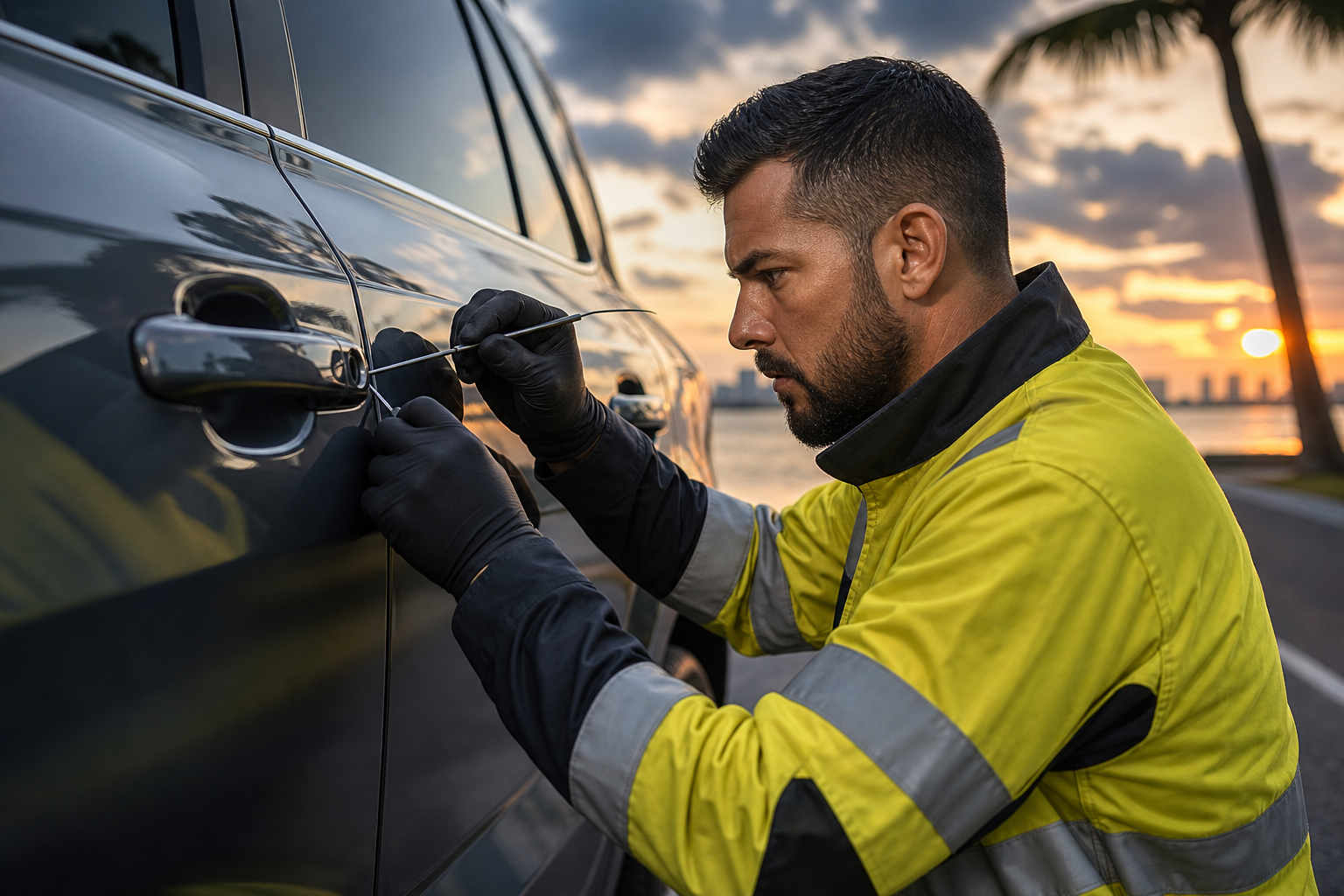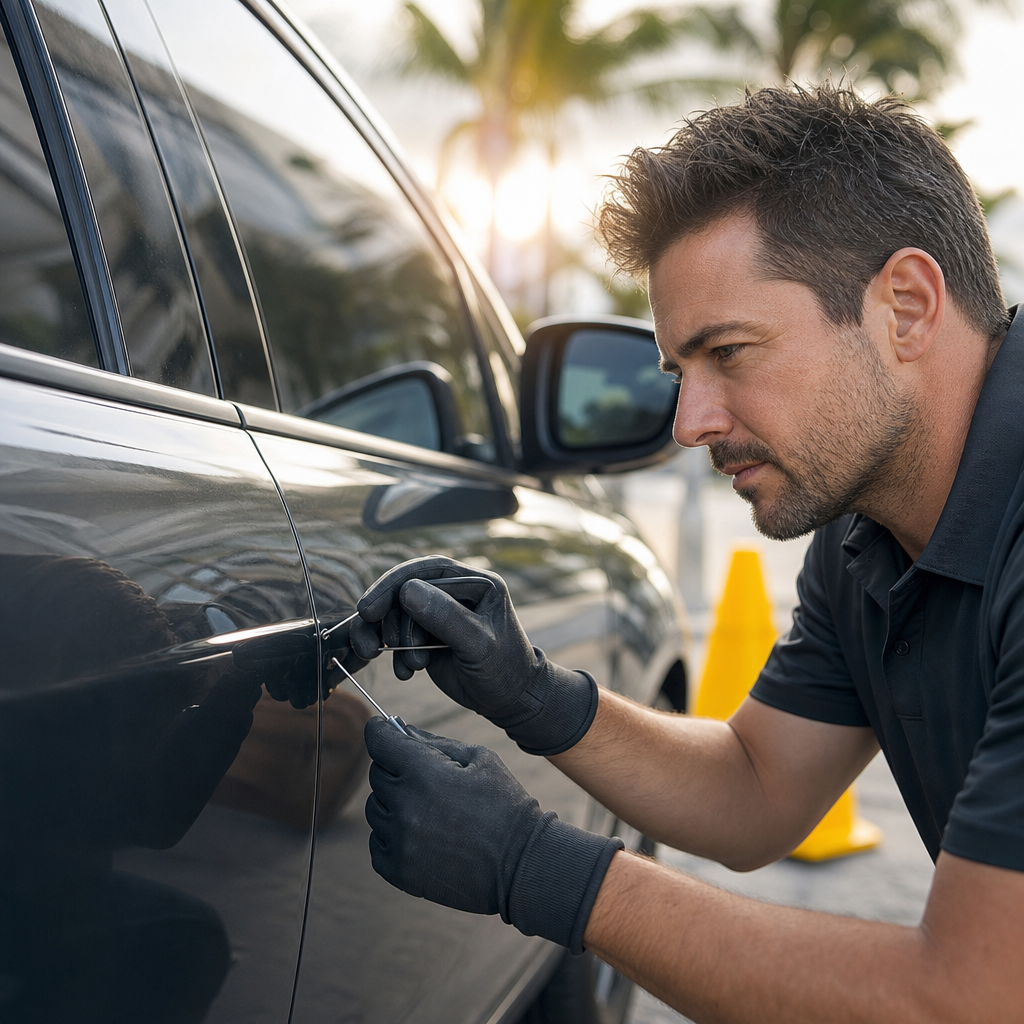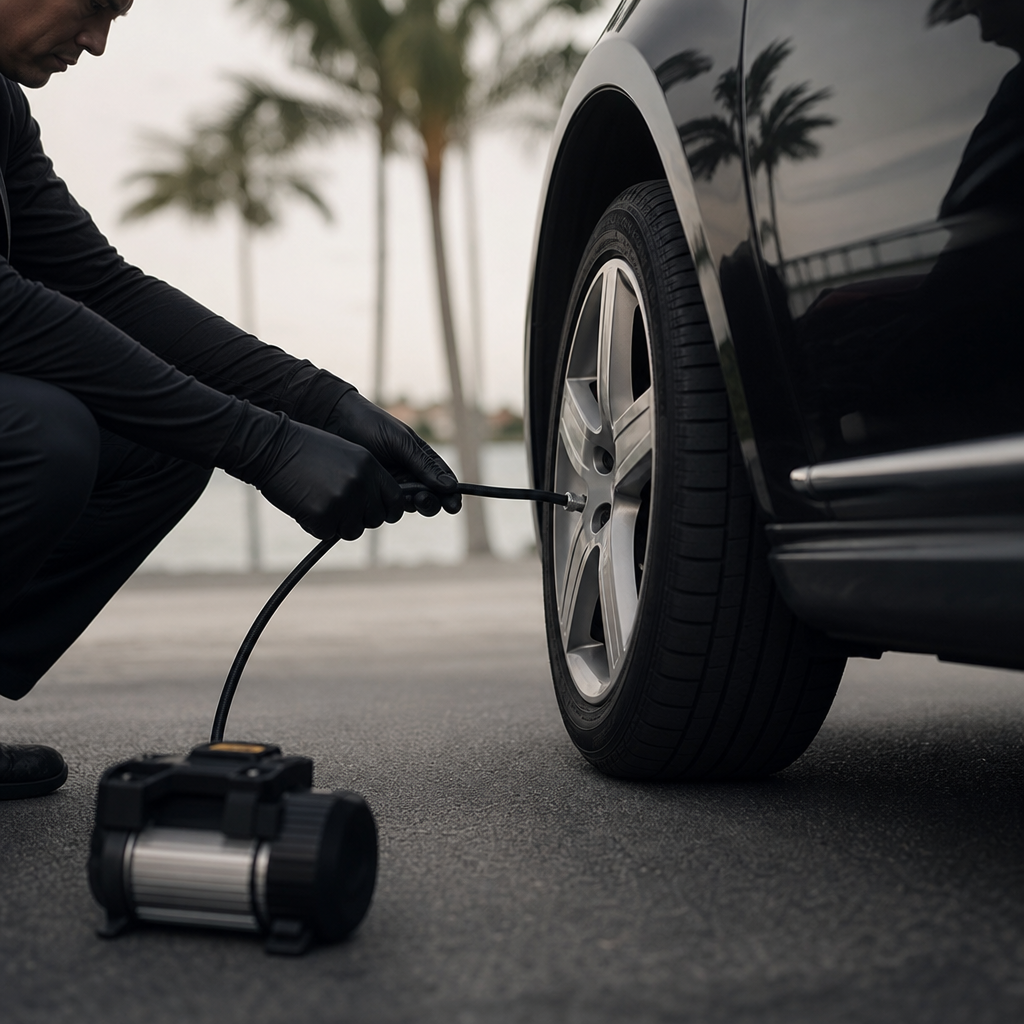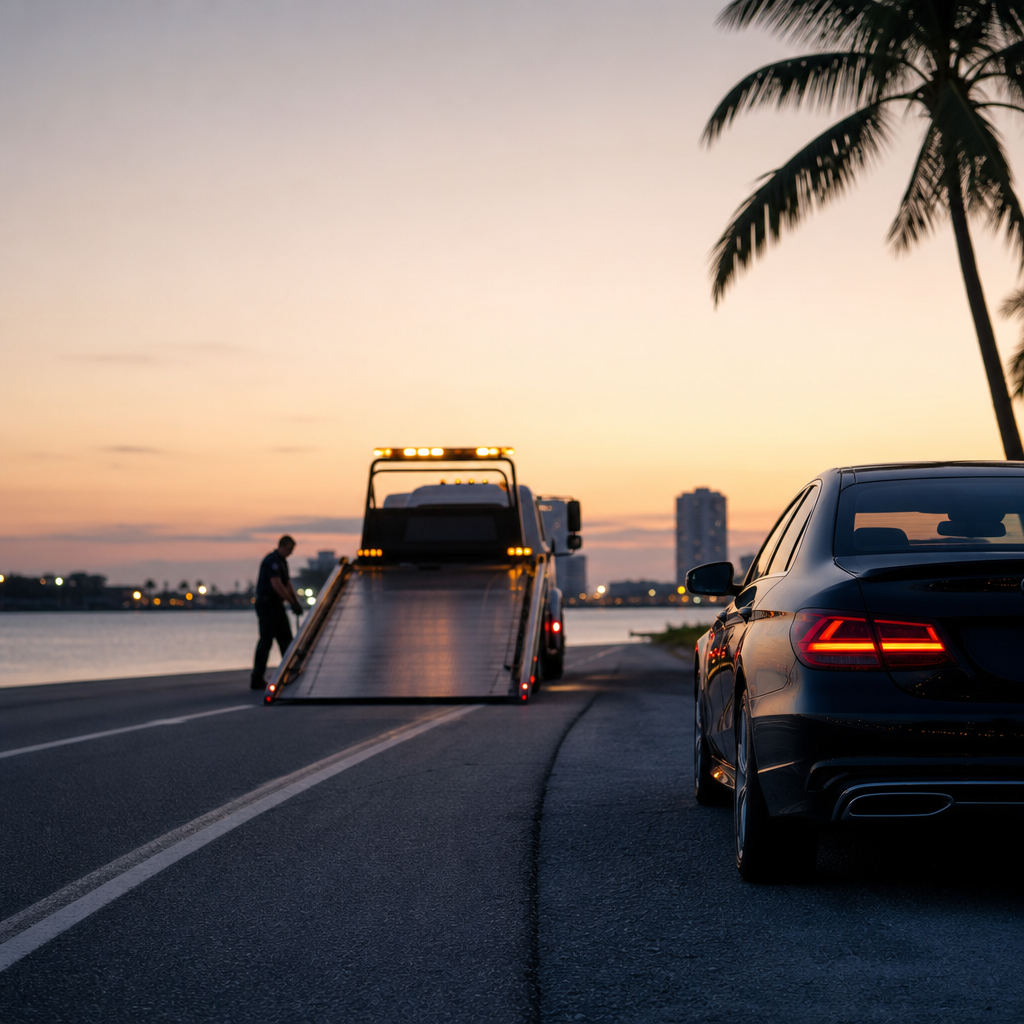
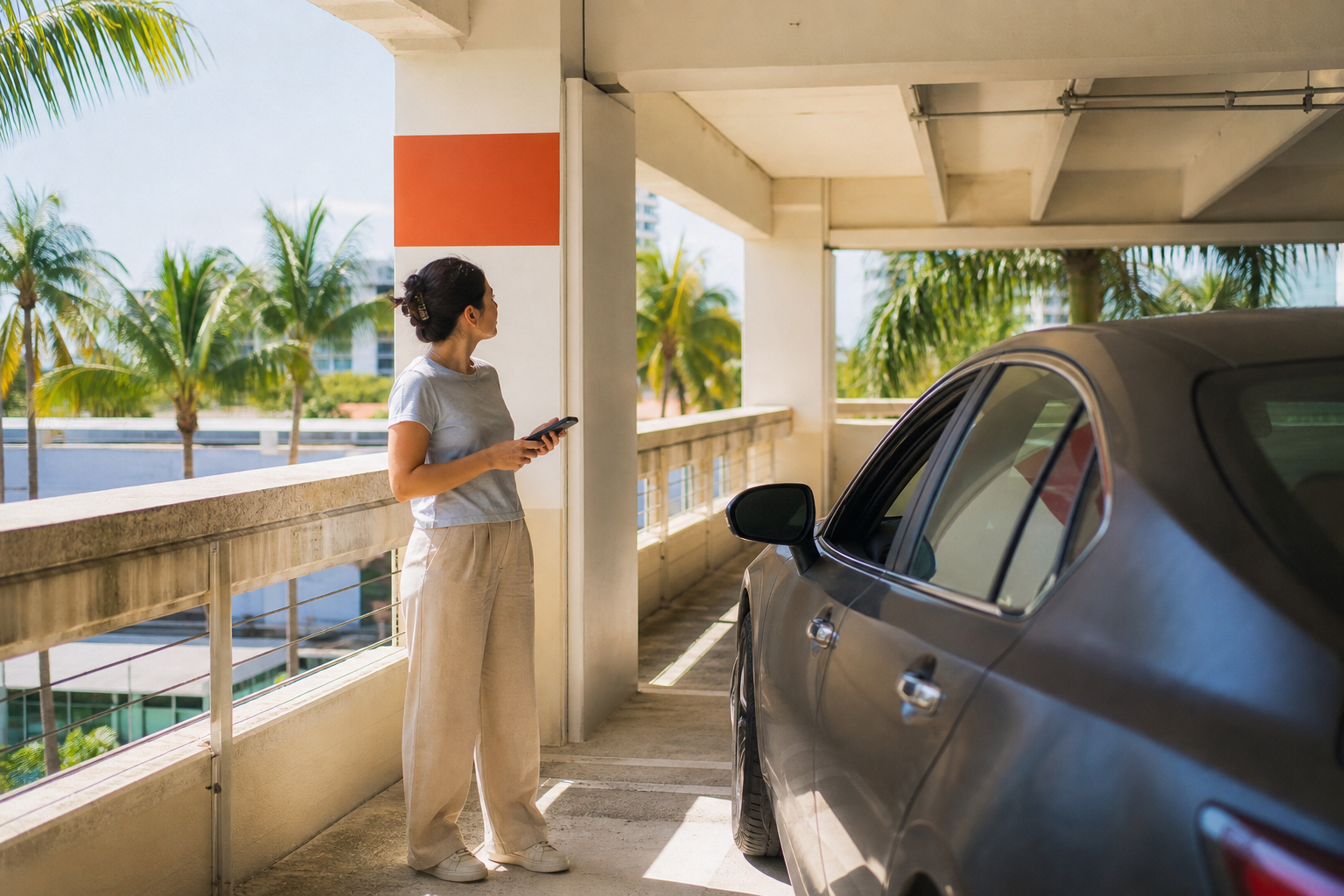
A car door clicks shut, the keys are visible on the seat, and the phone call for help begins. Before explaining the lockout, flat tire, dead battery, or other roadside problem, give the dispatcher one thing they can act on: a location that identifies exactly where the vehicle can be reached.
“West Palm Beach” is a starting point, not a usable roadside location. A service vehicle may need a street address, a safe approach direction, a garage level, a specific entrance, or confirmation that the car is in a travel lane. The clearer your first description is, the less back-and-forth you may face while waiting.
Before the problem: make your location easier to report
A lockout can happen anywhere, but the location details are usually easiest to gather before you walk away from the vehicle. This also helps with other non-emergency roadside-assistance situations, such as a vehicle that will not start or a tire problem.
Do capture the details that separate your car from nearby vehicles
- Save the street address or open the location details on your phone before leaving the vehicle.
- Notice the nearest entrance, garage level, row, stairwell, elevator bank, exit, or directional sign.
- Take a quick photo of the parking marker or nearby sign if it is safe to do so.
- Know the vehicle color, make, model, and license plate information if available.
- Keep your phone charged when possible, especially before parking in a large garage or restricted-access area.
Don’t rely on a broad destination name alone
“I am at a garage in West Palm Beach” leaves too many unanswered questions. The same is true of “I am at the airport” or “I am outside a hotel.” A roadside technician needs to know where the vehicle physically sits and how a service vehicle can lawfully and safely get close to it.
At a multi-level garage, the address may lead assistance to the correct structure but the wrong floor. At an airport access area, a pickup lane, terminal-side curb, short-term parking area, or garage level can have different access paths. Give the location in layers: facility name or address first, then your exact level or area, then the nearest marker or entrance.
At the roadside: report the vehicle position before the vehicle problem
Once you are stopped, your first decision is not always about the lockout or breakdown. It is about exposure. Can the vehicle remain where it is without creating an immediate traffic hazard?
Do state your traffic position plainly
Use direct language such as:
- “The vehicle is fully parked in a marked space.”
- “The vehicle is off the travel lane, beside the roadway.”
- “The vehicle is blocking an entrance.”
- “The vehicle is in an active lane and traffic is passing close by.”
- “The vehicle is in a garage where a tow truck may have height or access limits.”
This helps the roadside-assistance dispatcher understand both access and urgency. It also gives the responding technician useful information before arrival.
Don’t describe a hazardous position as “on the side” if that is not accurate
A vague location can create a dangerous misunderstanding. If the car is partly in a lane, near a blind curve, at an entry point, or where moving vehicles cannot easily pass, say so. Do not assume hazards are obvious from a map pin.
If the vehicle is in an active traffic lane, there is an immediate collision risk, or you face another immediate danger, contact emergency services. Do not cross traffic, stand in a travel lane, or attempt to push the vehicle into a safer position unless it can be done without entering danger. Follow instructions from emergency personnel or dispatchers.
While waiting: keep the location usable if circumstances change
Your first location report may be accurate when you call and less useful ten minutes later. A garage gate may be closed, your battery may fail, traffic conditions may change, or you may need to relocate to a safer nearby area.
Do send one correction when something material changes
Call back or reply through the service channel if you move the vehicle, move yourself to a safer nearby spot, discover a better entrance, or learn that the original access point is restricted. Keep the update short: “I am still at the same garage, but I am now on Level 2 near the east stairwell,” or “The vehicle is now fully in the parking area, not at the entrance.”
If you are safely parked out of moving traffic, remain secured in the vehicle with doors locked while waiting when that is the safest available option. If the vehicle is in a hazardous traffic position, do not assume staying inside is always safe. Contact emergency services for immediate danger and follow their direction about where to wait. Avoid placing yourself in traffic to look for a better marker.
Don’t keep searching for landmarks at the expense of safety
A useful location does not require a perfect description. An address, garage level, nearby sign, vehicle description, and callback number are usually more useful than walking around to find a better view. If your phone battery is low, tell dispatch early and preserve power after sharing the key details.
After service arrives: confirm the right vehicle and access point
Roadside service is most efficient when the person arriving can confirm they have reached the correct vehicle without guessing. This matters in busy parking areas where similar cars may be parked nearby.
Do verify the final details
- Confirm your vehicle color, make, model, and exact parking position.
- Tell the technician about a garage gate, height restriction, controlled entrance, or access issue you observed.
- Meet at a safe pedestrian location only if the technician asks and it is safe to do so.
- For a lockout, have identification and proof of authorization available if requested.
Don’t leave before the service provider can identify the vehicle
If you must move to a safer nearby area, tell the dispatcher where you will be and keep your phone available. Do not assume a technician can identify your car from a general description in a large lot or garage.
For help with a locked vehicle, use car lockout service. If the issue involves another roadside problem and you need assistance reaching or assessing the vehicle, see roadside assistance. When you call, start with your exact West Palm Beach location, vehicle position, and any immediate safety concern.
Quick location checklist before you call
- Exact address, facility name, or visible location identifier
- West Palm Beach, Palm Beach County, Florida
- Vehicle position: parking space, roadside, lane, garage, curb area, or entrance
- Nearest level, row, stairwell, gate, exit, or sign
- Vehicle color, make, model, and plate details if available
- Safe access information and any immediate hazard
- Working callback number and low-battery notice if applicable
Location-reporting FAQs
What if I do not know the street address?
Give the most specific combination you have: the facility or business name, parking level, nearby sign, entrance, and vehicle description. If your phone shows a map location, share that after describing the physical position of the vehicle.
Should I give my map pin only?
No. A map pin can help, but it may not show garage levels, a restricted entrance, or which side of a large property the vehicle is on. Pair it with a brief spoken description.
What should I say if I am locked out in a parking garage?
State the garage address or name, level, row or section, nearest stairwell or elevator, and the entrance a service vehicle should use if known. Mention any clearance or gate issue that could affect access.
When should I call emergency services instead of roadside assistance?
Contact emergency services first for immediate danger, including an active traffic-lane situation with collision risk, fire, a crash, a medical emergency, or another urgent hazard. For a safely parked lockout or non-emergency vehicle issue, roadside assistance is the appropriate first call.