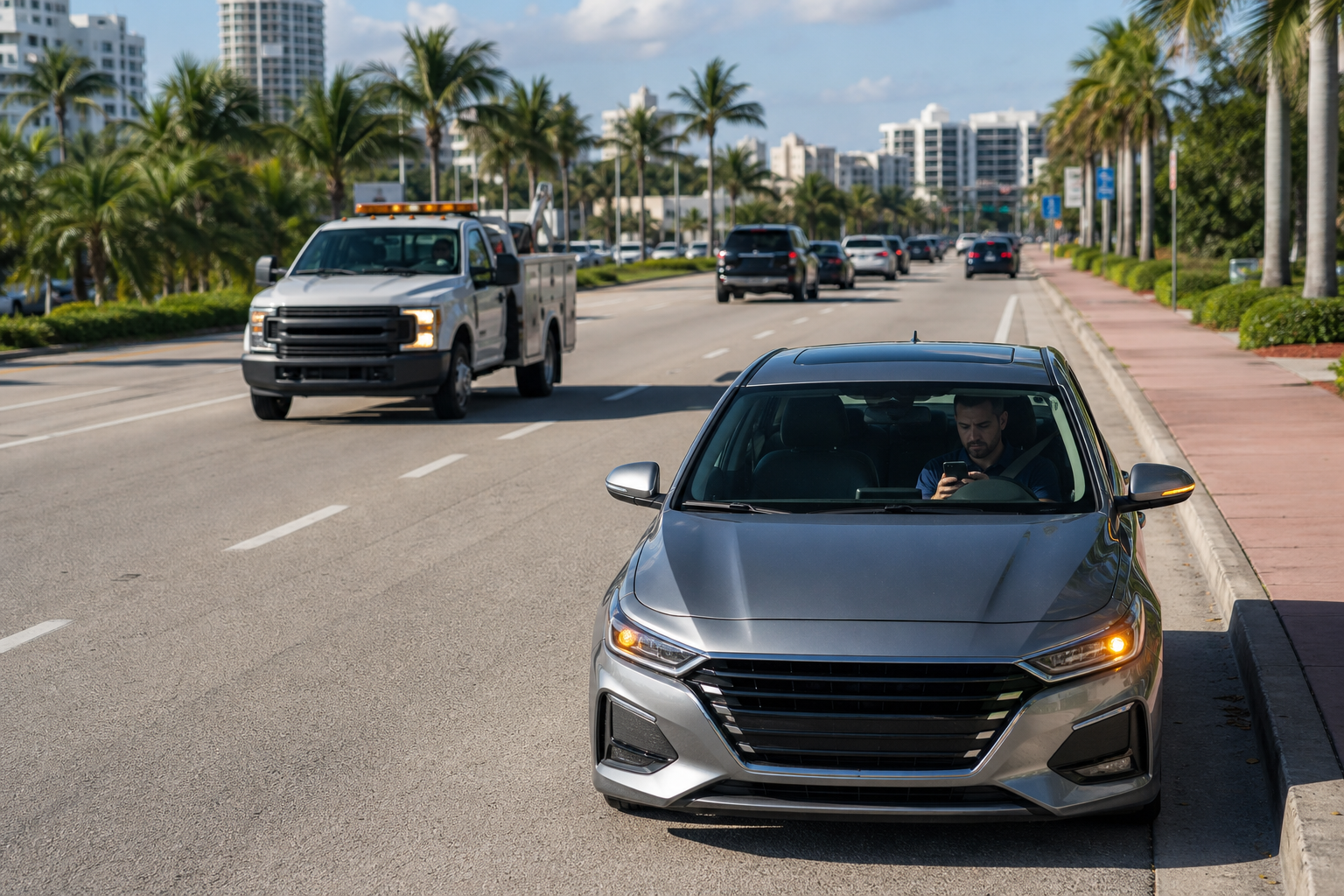
Use this rule first: If your vehicle can move under normal control, move only far enough to get out of the active traffic path. If it cannot move safely, or moving it could make the problem worse, stay restrained, make the vehicle visible, and call for roadside help.
A vehicle that stops in heavy traffic creates two problems at once: the mechanical issue and the traffic around you. Your first goal is not diagnosing the car. It is reducing exposure to moving vehicles while avoiding a rushed decision that leaves you stranded in a worse position.
Fast situation matrix: what changed, and what should you do?
| What you notice | Can you continue? | First move |
|---|---|---|
| Engine stalls but steering, braking, and vehicle movement still feel controllable | Possibly, only long enough to reach a safer stopping area | Turn on hazard lights, signal, and steer gradually toward the nearest practical space away from active travel lanes. |
| Vehicle loses power and will not accelerate normally | No for normal driving | Use momentum carefully to get out of the traffic stream if a safe path exists. Do not try to force the vehicle to maintain traffic speed. |
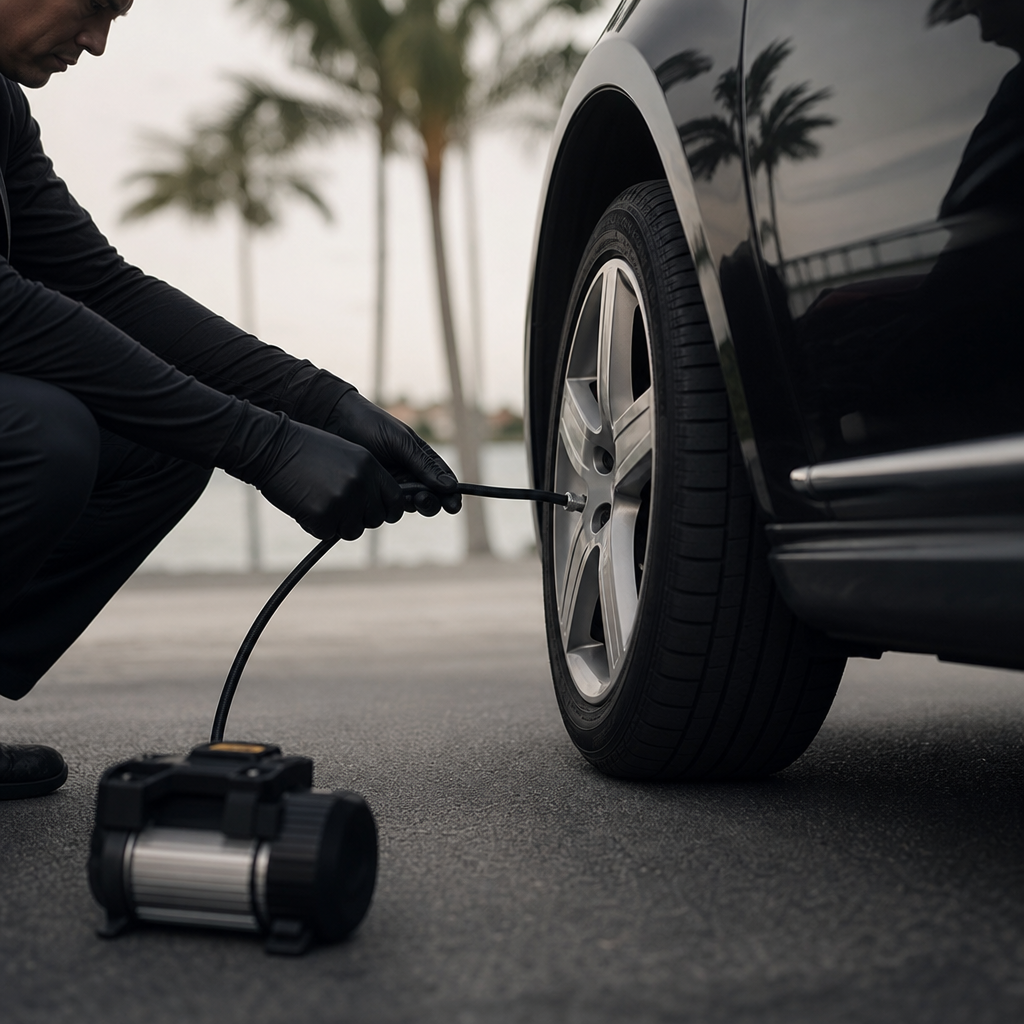
| Flat tire, severe vibration, scraping, or a wheel that feels unstable | No | Slow down smoothly. Avoid sharp turns, hard braking, and continuing through busy traffic if you can safely stop. |
| Steam, smoke, burning smell, fluid leaking, or an overheating warning | No | Stop as soon as you can do so safely. Turn off the engine if overheating, smoke, or a burning odor is present. |
| Battery warning, no-start condition, or electrical failure after you are already stopped | No | Keep hazards on if available, conserve phone battery, and arrange roadside assistance. |
| Locked out with the vehicle safely parked or stopped outside active traffic | Do not attempt to drive | Move yourself to a safer nearby location if needed and request car lockout service with the vehicle location and access details. |
The stop-or-continue decision
Ask one question: Can I control the vehicle predictably enough to move it out of the traffic path without creating a new hazard?
- Move only if control is intact. The steering should respond normally, the brakes should feel usable, and the vehicle should roll or drive without severe shaking, smoke, dragging, or a loss of directional control.
- Stop if control is reduced. A hard-to-steer vehicle, fading brakes, tire damage, overheating, smoke, or sudden mechanical noise is a stop-and-call situation.
- Do not repeatedly restart a vehicle that is showing signs of overheating, smoke, or an electrical problem. A restart may not solve the underlying issue and can leave you blocked in a more exposed position.
- Do not leave the vehicle in an active lane just to inspect it. You can gather useful information from inside the vehicle or once you are in a genuinely safer place.
If you are stopped where traffic is moving close to the vehicle, remain buckled inside when that is safer than exiting. If there is a fire, visible smoke entering the cabin, an injury, or an immediate threat from traffic, contact emergency services and move to a safer location only when you can do so without crossing active traffic.
First-minutes roadside checklist
- Make the vehicle noticeable. Activate hazard lights. At night, keep interior distractions low so you can see traffic and communicate clearly.
- Choose the safest available position. If the vehicle is still controllable, aim for an area that removes you from through traffic rather than attempting to reach a distant destination.
- Set the vehicle securely. Once stopped, shift into park if possible and apply the parking brake. Keep the wheels pointed away from moving traffic where practical.
- Stay aware before opening a door. A door opened into a traffic lane can create another hazard. Check mirrors and traffic before exiting.
- Keep occupants together. Children, passengers, and pets should not be moving around the vehicle while you are deciding what to do next.
- Do a quick visual check from a safe position. Look for smoke, steam, a damaged tire, or fluid beneath the vehicle. Do not crawl under the vehicle or touch hot components.
- Use your phone deliberately. Lower battery use, enable location sharing if you need it, and take one or two photos of the vehicle position only if doing so is safe.
For a dead battery, flat tire, fuel-related issue, or vehicle that will not restart, roadside assistance may be the right first call. If the vehicle cannot be made safe to drive where it sits, tell the dispatcher that you may need towing rather than a simple restart attempt.
What to tell roadside assistance before help is dispatched
Good information helps a service provider bring the right equipment and locate you with less back-and-forth. Before calling, collect the details you can safely confirm:
- Your location in West Palm Beach, Florida, including the direction you were traveling and any nearby cross street, business address, garage level, entrance, or visible sign.
- Your vehicle year, make, model, color, and license plate if available.
- What happened immediately before the vehicle stopped: stalled, overheated, flat tire, warning light, locked keys inside, no-start, or loss of power.
- Whether the vehicle is in a travel lane, shoulder area, parking lot, driveway, garage, or another constrained-access location.
- Whether the steering is locked, the wheels are turned, the vehicle is in park, or access is blocked by a low-clearance garage or tight entrance.
- How many people are with you and whether anyone has an urgent medical concern.
Constrained-access details matter. If your car is stopped inside a parking garage, near a controlled gate, or in an airport-related pickup or parking area, say so immediately. The provider may need to plan access differently than they would for an open roadside location.
Do not turn a breakdown into a lockout
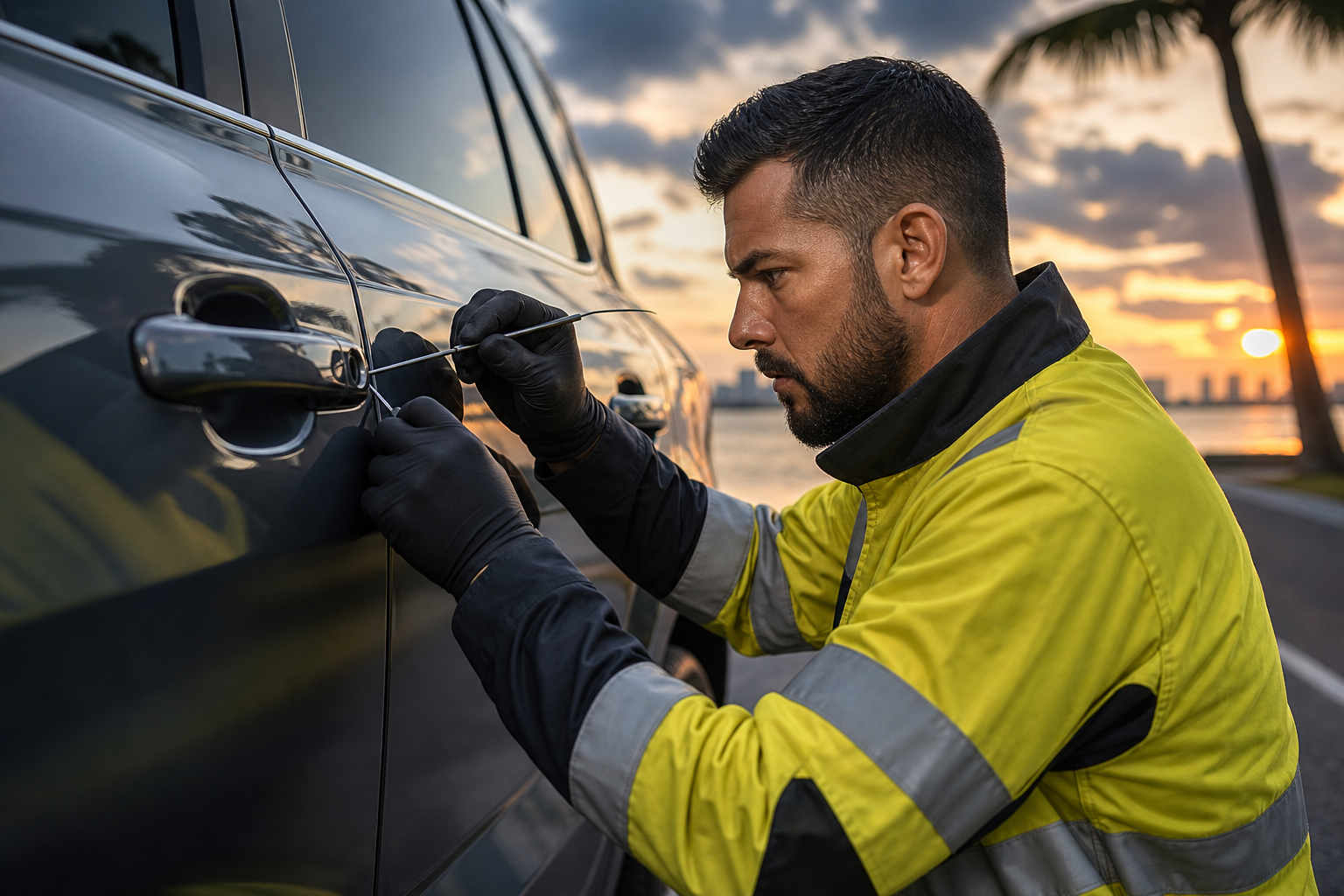
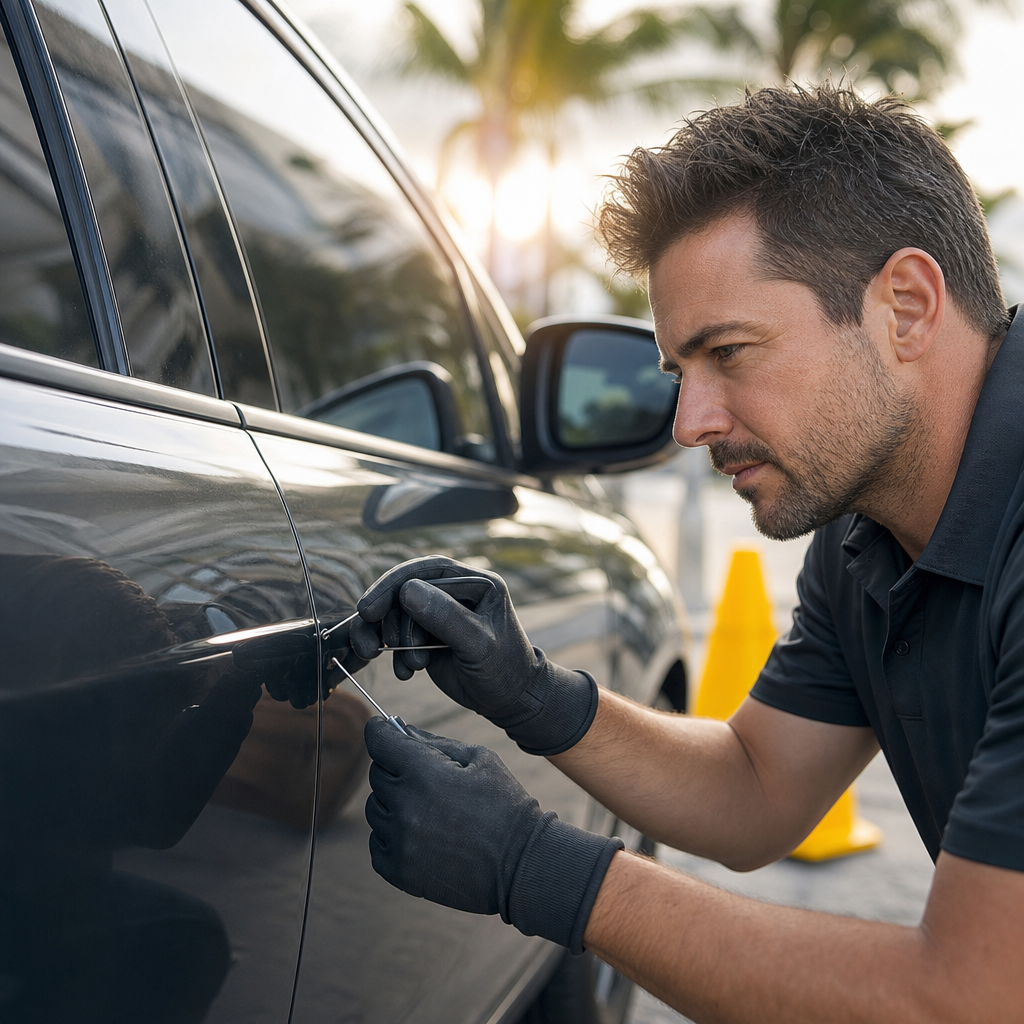
Stress makes small mistakes more likely. Before stepping away from the vehicle, keep your keys or key fob in your hand or pocket. If you must leave the cabin briefly, confirm that another occupant is not about to lock the doors behind you. If the keys are locked inside, avoid improvised entry methods that can damage weather seals, glass, door hardware, or electronic locks.
Instead, request professional car lockout help and provide the same location details you would give a roadside dispatcher. If the vehicle is stopped in or near active traffic, lead with that fact before explaining the lockout.
When towing is the safer next step
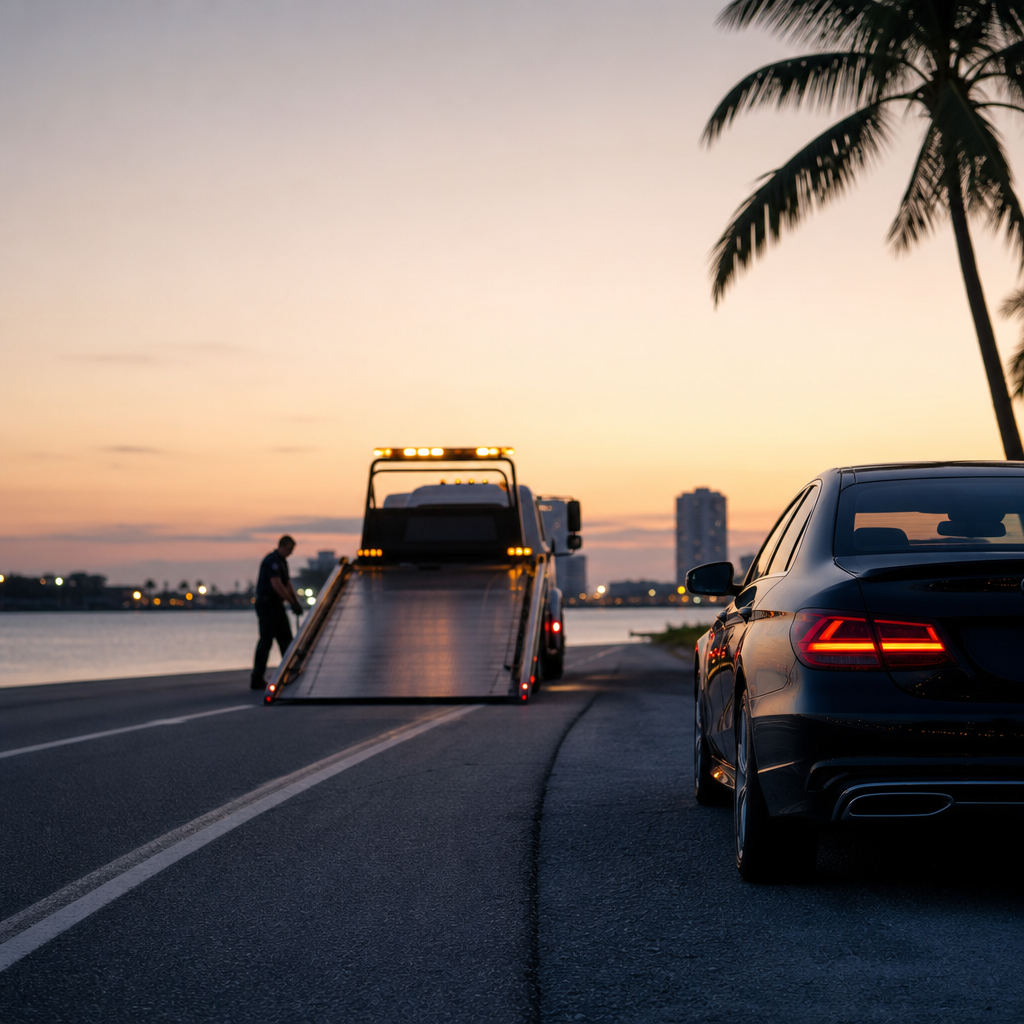
Request towing or ask the roadside provider to assess towing when the vehicle has major tire damage, overheating, smoke, fluid loss, steering or braking concerns, severe vibration, repeated stalling, or a condition that makes normal driving uncertain. A short drive to “see if it clears up” is not worth the risk if the car is already giving clear signs that it should not continue.
If your vehicle is safely parked but will not start, a roadside visit may identify a simple issue. If it is blocking traffic, trapped in a tight-access area, or unsafe to operate, tell the provider upfront that vehicle removal may be needed. You can also review roadside assistance options before calling if you are in a safe place.
Quick answers for stopped-vehicle situations
Should I stay in my car if it stops in heavy traffic?
Usually, staying buckled inside is safer than standing near moving vehicles when you cannot reach a safer area without crossing traffic. Exit only when there is a safer place to go and you can reach it without exposing yourself to traffic.
Should I keep trying to restart a stalled vehicle?
One reasonable restart attempt may be enough if there are no signs of overheating, smoke, burning odor, or serious mechanical trouble. If it does not restart or runs poorly, stop attempting to drive it and arrange help.
What if I am in a parking garage?
Tell roadside assistance the garage name or address, level, entrance route, clearance limitations you can see, and whether the vehicle is blocking another driver. Do not assume every service vehicle can access every garage level.
What details matter most for a towing call?
Your precise location, vehicle description, the failure symptom, whether the vehicle can roll and steer, and any access restriction are the most useful starting details.
When should I call for immediate emergency help?
Call emergency services for a collision with injuries, fire, smoke creating immediate danger, or a situation where you cannot remain safe around traffic. For a non-emergency breakdown or lockout, contact roadside assistance or towing with your location ready.
Ready to call? Have your West Palm Beach location, vehicle details, and the exact symptom in front of you. Then request the service you need and state first if the vehicle is exposed to heavy traffic, inside a garage, or otherwise difficult to access.