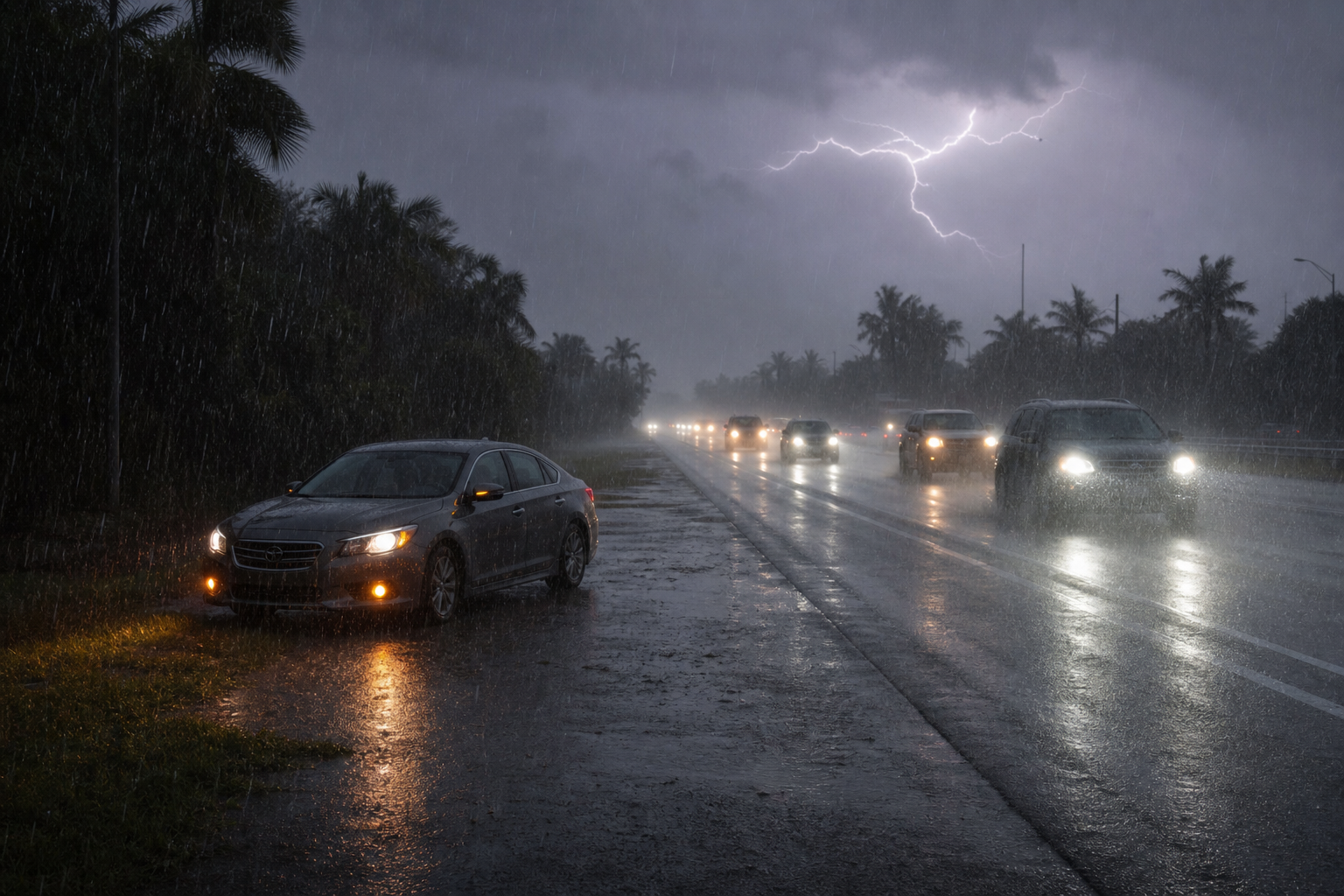
Lightning and Roadside Emergencies: Where Drivers Should Wait
The highest-risk mistake is getting out of the car to stand beside it during lightning and heavy rain. That puts a driver in two danger zones at once: exposed to lightning and difficult for passing traffic to see. If your vehicle is safely out of moving traffic and you can remain inside a fully enclosed hard-top vehicle, stay inside with the windows closed. If you are locked out or the vehicle cannot be safely occupied, move toward a substantial enclosed building rather than waiting beside the car, under a tree, or beneath an open shelter.
Risk signals: signs your current waiting spot is not safe
Heavy rain changes a routine lockout, flat tire, or vehicle problem into a visibility problem. In West Palm Beach, a stopped vehicle can be hard for approaching drivers to spot when rain, spray, glare, and dark skies reduce their sight distance. The safest place to wait is not always the closest place to the vehicle.
Your vehicle is partly in the travel lane
A car stopped near moving traffic is vulnerable to a secondary collision, especially when approaching drivers have limited visibility. If you can safely move the car without placing yourself in traffic, move it farther from the active lane. If it cannot be moved and traffic exposure is immediate, prioritize getting help and follow emergency instructions rather than attempting repeated fixes outside.
You can hear thunder or see lightning
Thunder means lightning is close enough to be a concern. A closed, metal-roof passenger vehicle can provide a better lightning shelter than being outside because its metal body directs electrical energy around the occupants. The protection comes from the vehicle's enclosed metal shell, not from the tires. Keep windows closed and avoid touching exposed metal components inside the vehicle.
A convertible with the top down, an open utility vehicle, a golf cart, an awning, a bus stop shelter, a carport, or a small open-sided structure is not the same kind of lightning shelter. Do not use trees, utility poles, fences, or open pavement as a waiting place.
You are locked out in rain or lightning
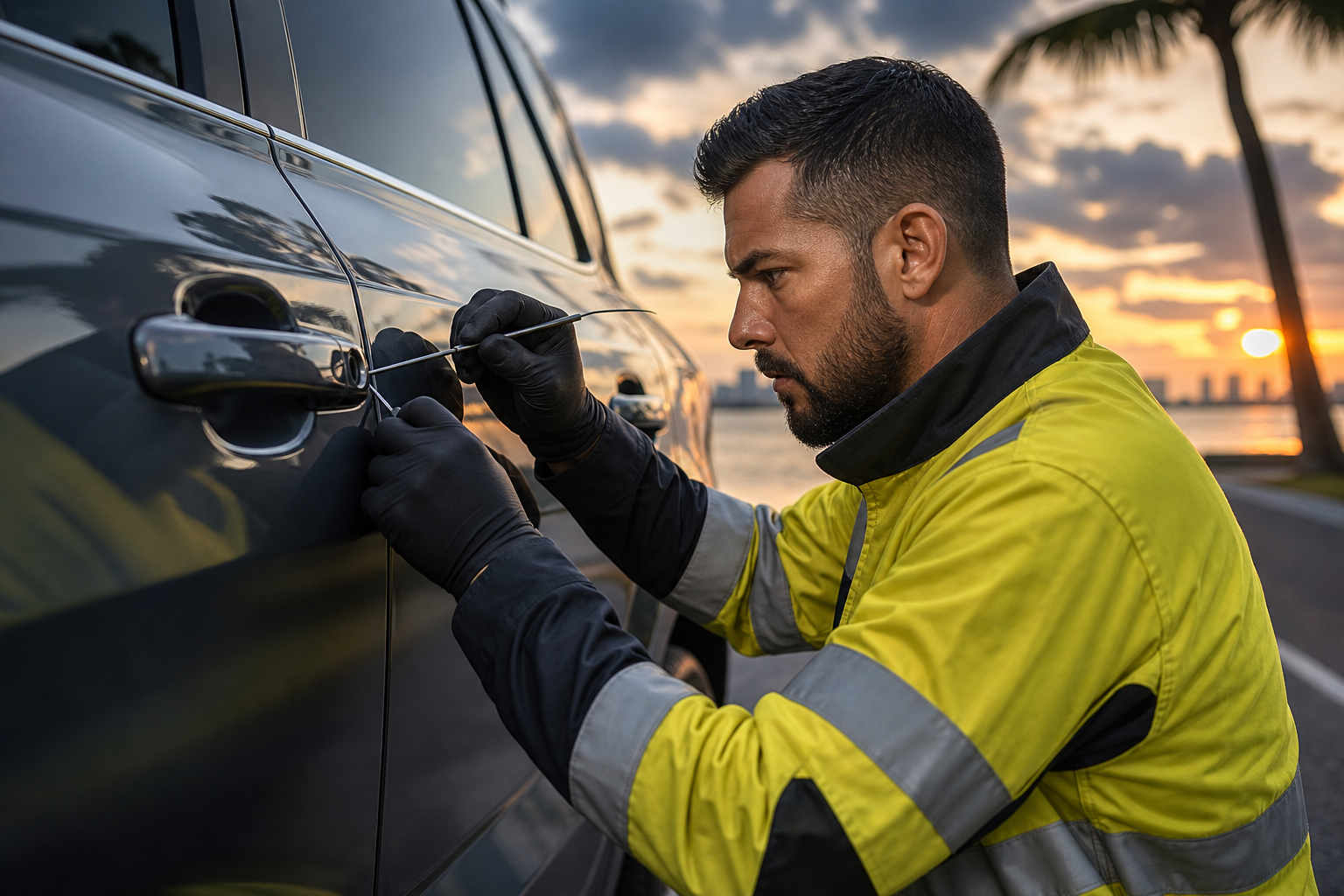
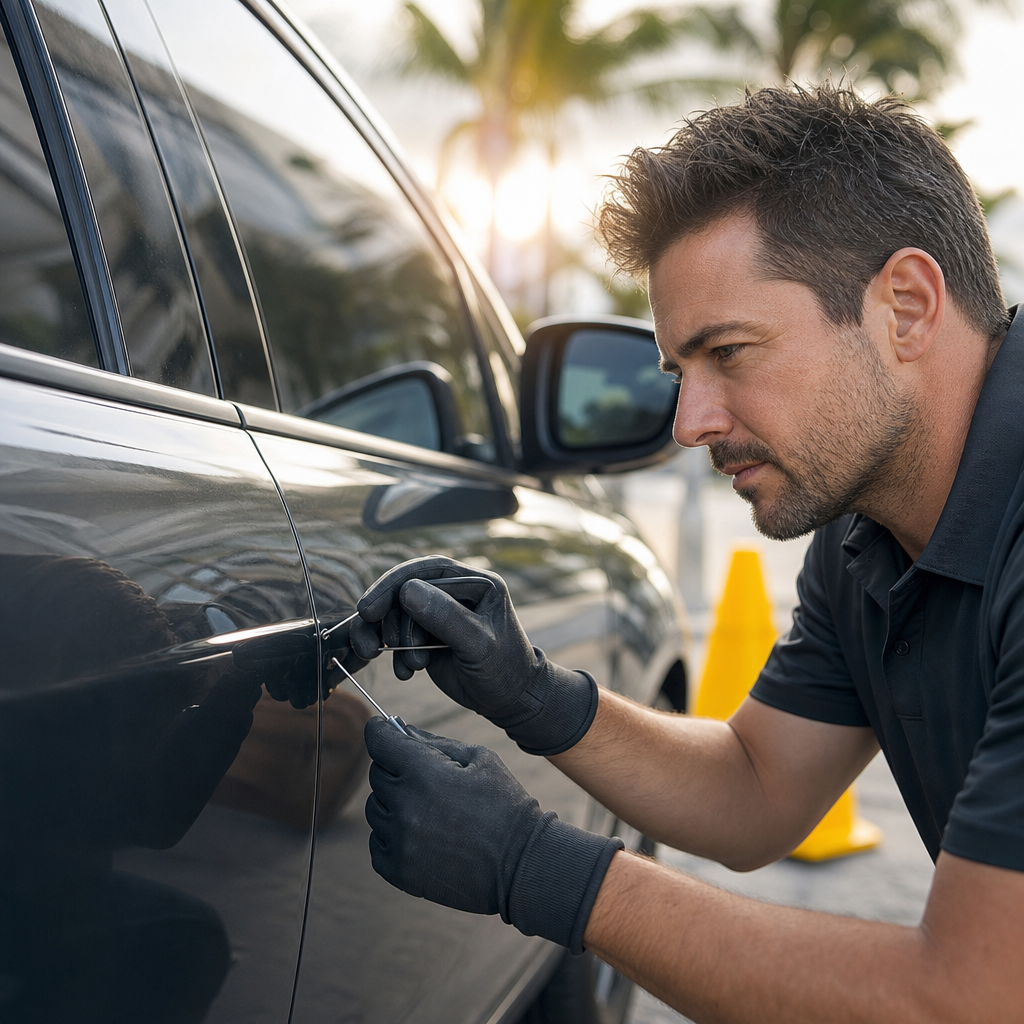
A car lockout removes the simplest shelter option: sitting inside your own vehicle. Do not remain pressed against the door, lean on the vehicle, or keep trying handles while lightning is active. If a substantial enclosed building is available nearby without crossing dangerous traffic, wait there and arrange car lockout help">car lockout help. Give the dispatcher the vehicle description, its exact position, and the safest place to meet you.
Water is collecting around the vehicle or along your walking path
Do not walk through water when you cannot judge its depth, surface condition, or what is beneath it. A wet roadside can conceal uneven pavement, debris, open drainage areas, and moving water. Stay out of pooled or moving water and do not move toward a shelter that requires crossing a flooded-looking area.
Safe actions: play the scenario in front of you
Scenario A: You are inside a safely stopped car
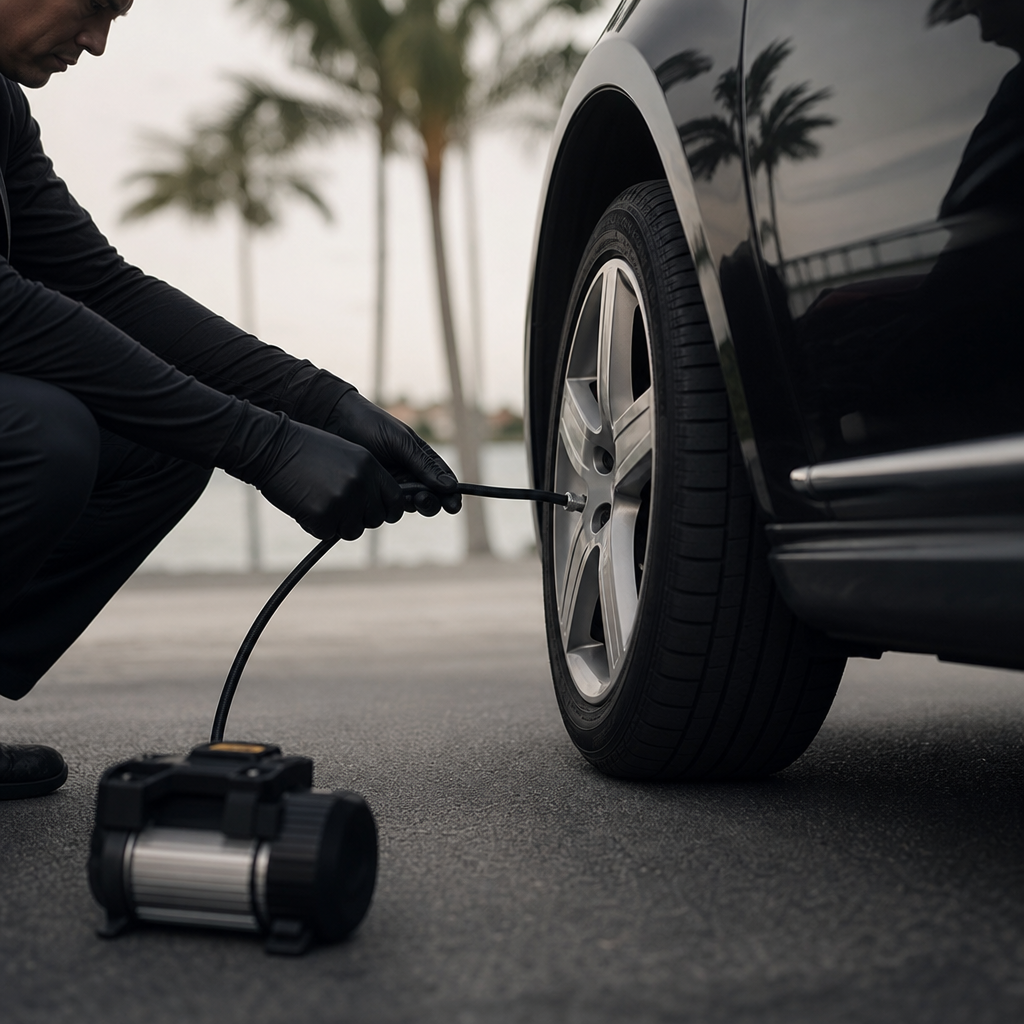
If the vehicle is fully off the active lane or otherwise in a reasonably safe position, remain inside during lightning. Close windows, activate hazards if possible, and keep your seat belt on if traffic is nearby. Call for roadside assistance">roadside assistance from inside rather than stepping out to inspect the problem. If you need a tow or another roadside service, tell the dispatcher that heavy rain and lightning are affecting visibility.
Do not exit just to place warning items, inspect damage, retrieve something from the trunk, or direct the arriving technician. The service provider can advise on the safest meeting approach after arrival.
Scenario B: You are locked out, and the car is in a safe parking area
Move away from the vehicle and seek a substantial enclosed building. A staffed business, enclosed lobby, or other solid enclosed structure is preferable to waiting under a canopy or beside the car. Call for lockout service, keep your phone charged if possible, and be ready to return only when the service provider contacts you or weather conditions allow safer movement.
If no building is available, avoid isolated trees, open areas, metal railings, and standing water. Call for help and explain that you are locked out in active lightning. The best next step may be based on your vehicle position, traffic exposure, and the available shelter—not simply on how quickly you can get back to the driver door.
Scenario C: The car is disabled where traffic can reach it
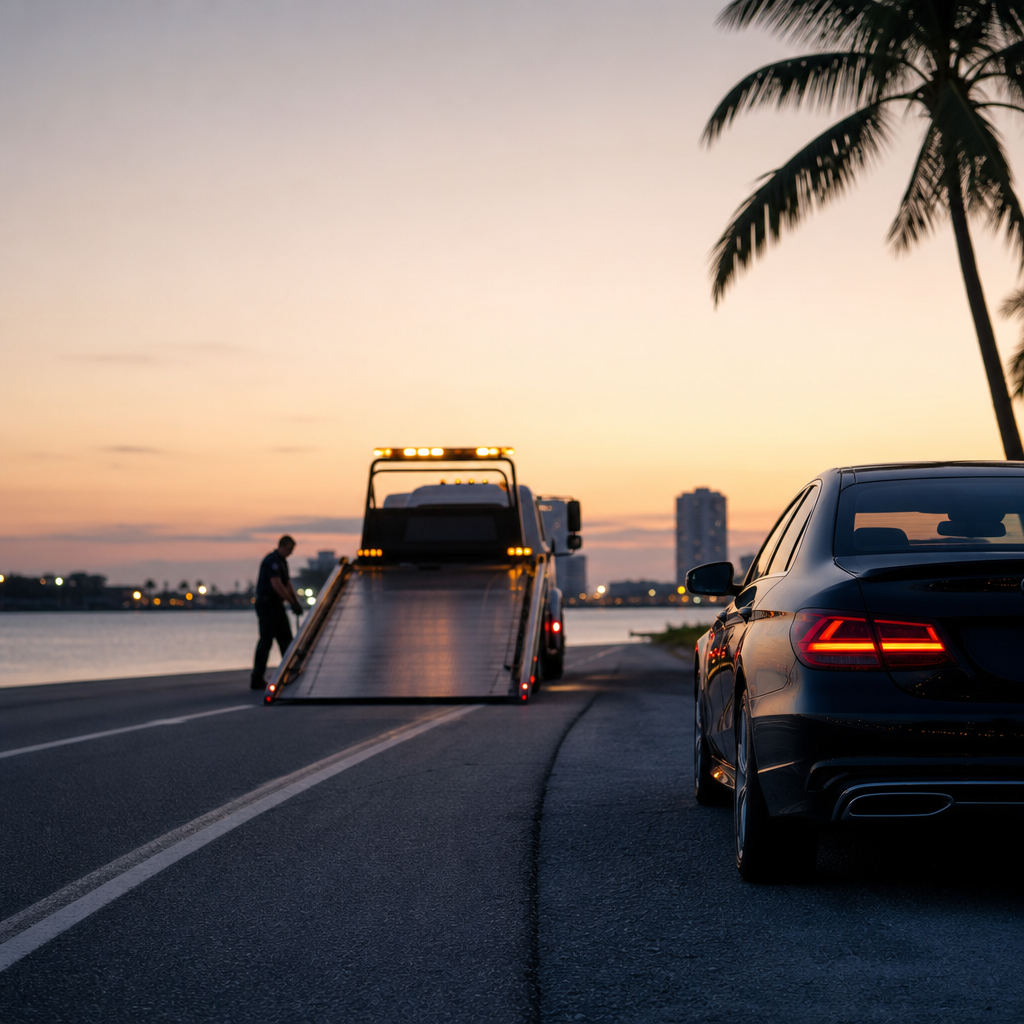
Keep occupants in the vehicle if remaining inside is safer than stepping into traffic and the vehicle is not facing an immediate hazard. Use hazard lights if available. Call for roadside help and describe the traffic exposure, rain intensity, vehicle location, and number of people with you. If there is an immediate threat of a crash, injury, fire, or another urgent emergency, contact emergency services.
Scenario D: Help is on the way, but visibility is poor
Do not stand in the roadway waving at vehicles or try to guide a tow truck through traffic. Keep your phone available, watch for calls or messages, and provide practical identifying details: vehicle color, type, direction it is facing, and where it is positioned relative to the safe area where you are waiting. If you are no longer beside the vehicle, say so clearly.
Avoidable mistakes: choices that create more exposure
- Waiting under a tree: It may feel like rain cover, but it leaves you outside and near a tall object during lightning.
- Standing beside a locked car: You remain exposed to traffic spray, low visibility, and lightning without gaining useful protection.
- Sheltering under an open canopy or pavilion: Overhead cover alone does not make an open-sided structure a reliable lightning shelter.
- Crossing active lanes to reach a better-looking shelter: A shelter is not safer if getting there requires walking through low-visibility traffic.
- Continuing DIY entry attempts in a storm: Repeated attempts can keep you exposed longer and may damage the vehicle. Use a professional lockout service instead.
- Assuming hazards solve the visibility problem: Hazard lights help signal a stopped vehicle, but they do not remove the risk of rain-obscured traffic.
- Walking through pooled water: You cannot reliably assess depth, footing, or hidden hazards from the edge.
Decision checklist: pick the next safe move
Use this checklist before deciding where to wait or what service to request:
- Can I safely remain inside a fully enclosed hard-top vehicle? If yes, stay inside with windows closed while lightning is active.
- Is the vehicle exposed to moving traffic? If yes, turn on hazards if possible, avoid exiting into traffic, and clearly report the exposure when requesting help.
- Am I locked out? If yes, do not wait beside the door. Move to a substantial enclosed building if reachable without crossing unsafe traffic.
- Is there lightning, thunder, standing water, or severe visibility loss? If yes, postpone nonessential outside tasks and choose shelter over vehicle troubleshooting.
- Can I give a service provider a clear location and vehicle description? Confirm the vehicle color, type, position, and the safest place for the driver to meet you.
- Is there an immediate threat to people or traffic? If yes, seek emergency assistance first.
Make the call based on your situation: If you are locked out but can wait in an enclosed building, request lockout service and tell the provider where you are sheltered. If the vehicle is exposed to traffic, rain is limiting visibility, or you cannot safely wait near it, request roadside assistance and lead with the traffic risk. Request roadside help when the vehicle location—not just the vehicle problem—creates the urgency.
Common questions from stranded drivers
Is a car safe during lightning?
A fully enclosed hard-top passenger vehicle is generally a better lightning shelter than being outside. Keep windows closed and avoid touching exposed metal parts inside. Do not rely on a convertible with the top down or an open-sided vehicle for the same protection.
What should I do if I am locked out while lightning is active?
Do not wait beside the vehicle or attempt prolonged DIY entry. Find a substantial enclosed building if one can be reached safely, then call for car lockout service and provide the vehicle location and your safe meeting location.
Should I stand under a gas station canopy or similar awning?
No. An open-sided canopy or awning can keep rain off but is not the same as a substantial enclosed building for lightning shelter. Move inside an enclosed structure if available.
Should I leave my vehicle if it is stopped near traffic?
That depends on the immediate danger. Walking into low-visibility traffic can be more dangerous than remaining inside a vehicle. Use hazard lights if available, call for help, explain the vehicle's exposure, and contact emergency services if there is an immediate threat.